

If you have ever experienced hip pain or a sharp, shooting ache down the back of your leg, you might have heard about the piriformis muscle.
Despite its relatively small size, this flat, band-like muscle located deep inside the buttocks plays a massive role in how your hips, pelvis, and lower body move. But what does it actually do, and why does it cause so much trouble when it gets flared up?
The Anatomy: Where Is It?
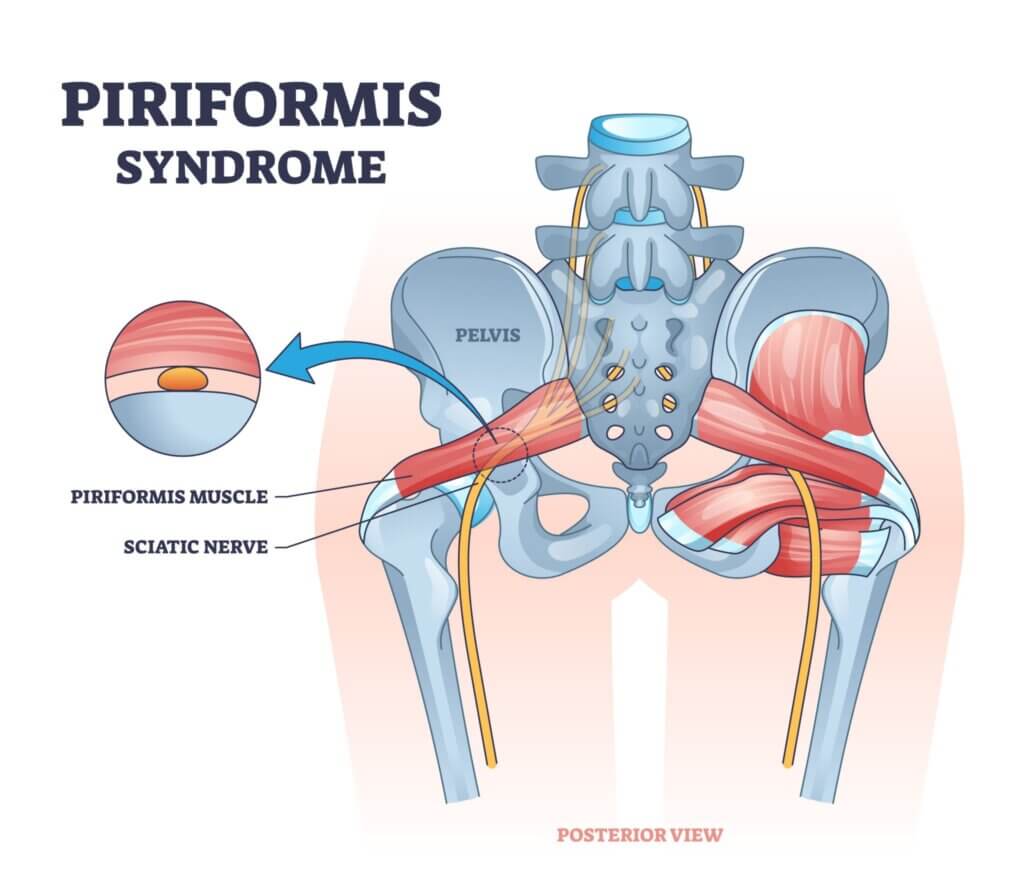
The piriformis connects the front of your sacrum (the triangular bone at the base of your spine) to the top of your femur (thigh bone).
Because of where it sits, it acts as a stabilizing bridge across the hip joint. This muscle runs right alongside and often directly beneath or through the sciatic nerve, the thickest nerve in the human body.
The 3 Key Jobs of the Piriformis
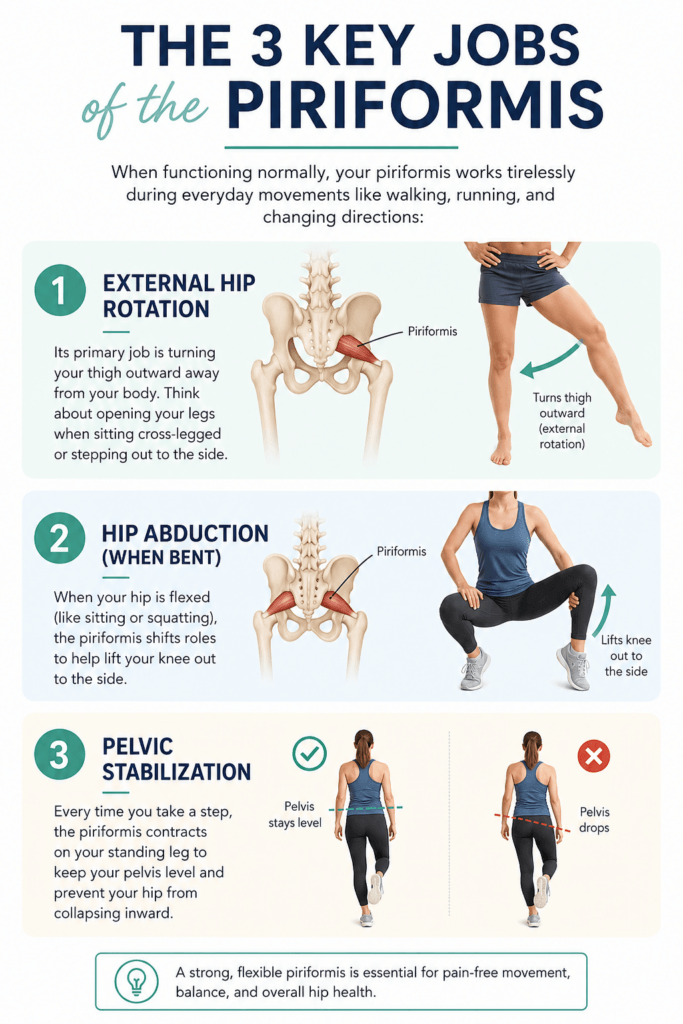
When functioning normally, your piriformis works tirelessly during everyday movements like walking, running, and changing directions:
- External Hip Rotation: Its primary job is turning your thigh outward away from your body. Think about opening your legs when sitting cross-legged or stepping out to the side.
- Hip Abduction (When Bent): When your hip is flexed (like sitting or squatting), the piriformis shifts roles to help lift your knee out to the side.
- Pelvic Stabilization: Every time you take a step, the piriformis contracts on your standing leg to keep your pelvis level and prevent your hip from collapsing inward.
Why Does the Piriformis Get So Angry?
Because modern life involves prolonged sitting, long commutes, and repetitive strain, the piriformis is notorious for tightening up or overworking.
When the piriformis becomes irritated, tight, or inflamed, two main issues tend to happen:
- Piriformis Syndrome: The tight muscle compresses or pinches the nearby sciatic nerve, sending numbness, tingling, or burning pain down into the buttock, thigh, or calf.
- Hip & Low Back Compensation: When the piriformis is locked up, it alters your gait and forces surrounding muscle groups (like the glutes, lower back, and hamstrings) to pick up the slack.
3 Red Flags That Point to Piriformis Strain
| Symptoms | What You Might Feel |
| Ache while sitting | Deep buttock ache after sitting for more than 20–30 minutes |
| Pain with hip rotation | Sharp discomfort when stepping out of the car or crossing legs |
| Sciatic-like symptoms | Radiating numbness or pain down the back of the leg |
If you are experiencing hip pain or sciatica that is limiting your daily activities, Respire’s physical therapists can help you get back to the life you love. Call Respire Physical Therapy at the Falls Church Location (703-671-1871) or the Annandale Location (571-369-6728) to schedule an appointment with one of our skilled Physical Therapists today! Click here to request an appointment online and we will contact you as soon as possible.

Tags: annandaleva, hip pain, painfreeliving, washingtondc, choosept, health blog, arlingtonva, pt education, alexandriava, regain your movement freedom, Physical Therapy, springfieldva, movement is medicine, Respire Physical Therapy, fallschurchva, evidence based practice, Back pain, ptworks, piriformis muscle, physical therapist, sciatica pain, fairfaxva