

Peroneal tendinitis is an overuse injury involving the peroneal tendons, which run along the outer side of the ankle and foot. These tendons connect the peroneal muscles in the lower leg to the bones of the foot and help control ankle movement, provide stability, and support balance.
When these tendons become irritated or inflamed due to repetitive stress, excessive loading, or biomechanical issues, pain and dysfunction can develop.
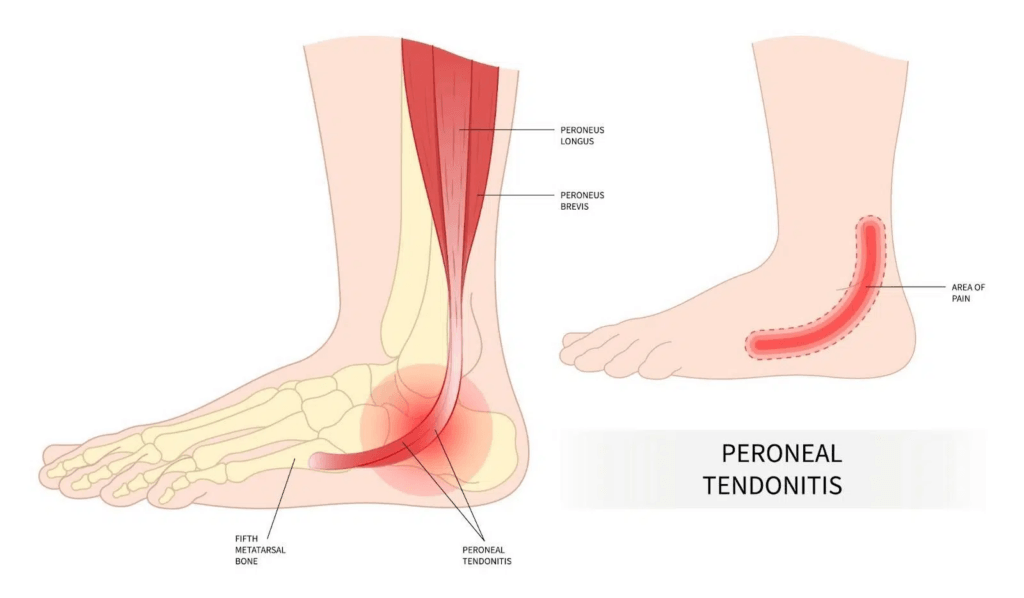
Common Causes of Peroneal Tendinitis
Several factors can contribute to the development of peroneal tendinitis, including:
- Repetitive ankle movements from running, jumping, or sports
- Sudden increases in training intensity or mileage
- Walking or running on uneven surfaces
- Poor footwear that lacks adequate support
- Ankle instability or a history of ankle sprains
- High arches, which can place additional stress on the peroneal tendons
Athletes who participate in sports that involve cutting, pivoting, and rapid directional changes may be particularly susceptible to this condition.
Signs and Symptoms
Symptoms of peroneal tendinitis may develop gradually or appear after increased physical activity. Common symptoms include:
- Pain along the outside of the ankle or foot
- Tenderness when touching the affected tendons
- Swelling near the outer ankle
- Pain that worsens during activity
- Weakness or instability in the ankle
- A snapping sensation around the ankle in some cases
If left untreated, symptoms may worsen and interfere with daily activities and athletic performance.
How Is Peroneal Tendinitis Diagnosed?
A healthcare provider or physical therapist can often diagnose peroneal tendinitis through a thorough evaluation. This typically includes:
- Reviewing your medical history and activity level
- Assessing ankle mobility and strength
- Evaluating walking and movement patterns
- Performing special tests to identify tendon irritation
In some cases, imaging studies such as ultrasound or MRI may be recommended to rule out tendon tears or other ankle conditions.
How Physical Therapy Can Help
Physical therapy is often one of the most effective non-surgical treatments for peroneal tendinitis. A personalized treatment plan addresses both symptoms and the underlying factors contributing to the condition.
- Pain and Inflammation Management
- Restoring Mobility
- Strengthening the Ankle and Lower Leg
- Improving Balance and Stability
- Correcting Movement Patterns
- Safe Return to Activity
Physical therapy plays a key role in reducing pain, restoring strength and mobility, and addressing the underlying causes of tendon irritation. Call Respire Physical Therapy at the Falls Church Location (703-671-1871) or the Annandale Location (571-369-6728) to schedule an appointment with one of our skilled Physical Therapists today! Click here to request an appointment online and we will contact you as soon as possible.
Tags: annandaleva, Foot Pain, painfreeliving, washingtondc, health blog, choosept, movementismedicine, arlingtonva, peroneal tendinopathy, alexandriava, pt education, Physical Therapy, springfieldva, evidence based practice, Respire Physical Therapy, fallschurchva, burkeva, ankle pain, ptworks, peroneal tendonitis, fairfaxva, physical therapist