

If you’ve ever felt a sharp or burning pain along the outside of your knee during a run or after a long walk, you might have encountered IT band syndrome. Short for iliotibial band syndrome, this common overuse injury affects runners, cyclists, and even people who spend long hours on their feet.
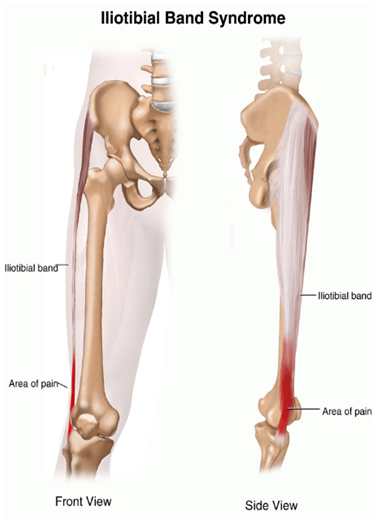
The iliotibial (IT) band is a thick strip of connective tissue that runs along the outside of your thigh, from your hip down to your shin. Its job is to help stabilize your knee and support smooth movement during activities like walking, running, and climbing stairs. But when this band becomes tight or irritated, it can rub against the outer part of the knee, leading to inflammation and pain.
What Causes IT Band Syndrome?
IT band syndrome is typically caused by repetitive motion and poor movement mechanics. Some of the most common contributing factors include:
- Overtraining or sudden increases in activity level
- Weak hip or glute muscles
- Poor running form or improper footwear
- Tight muscles in the hips and thighs
Left untreated, the discomfort can worsen, making it difficult to stay active.
How Physical Therapy Can Help
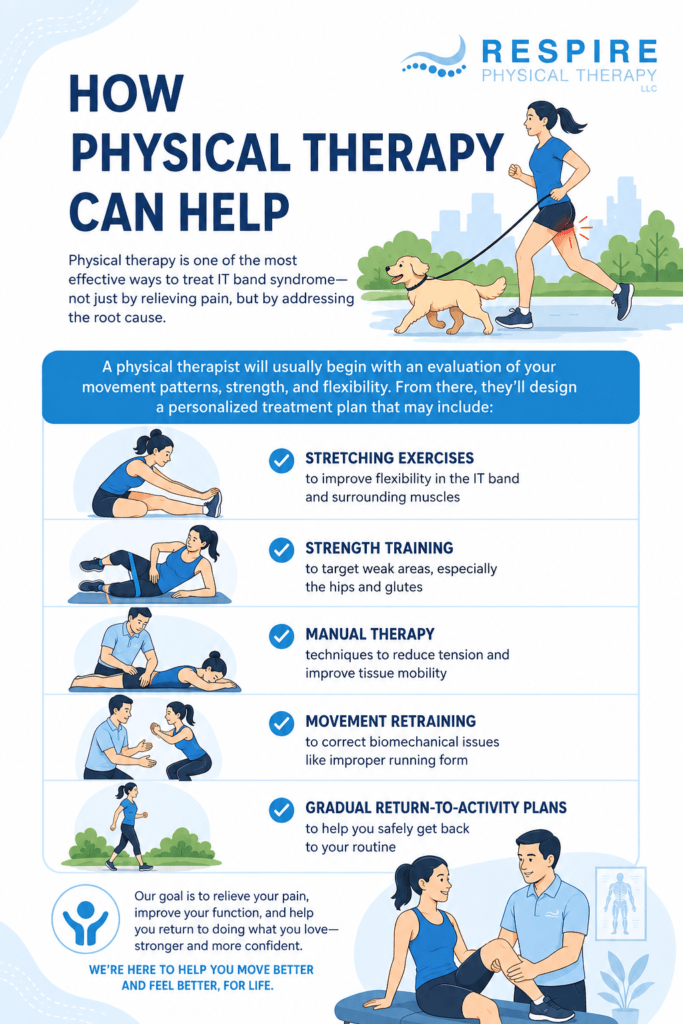
Physical therapy is one of the most effective ways to treat IT band syndrome—not just by relieving pain, but by addressing the root cause.
A physical therapist will usually begin with an evaluation of your movement patterns, strength, and flexibility. From there, they’ll design a personalized treatment plan that may include:
- Stretching exercises to improve flexibility in the IT band and surrounding muscles
- Strength training to target weak areas, especially the hips and glutes
- Manual therapy techniques to reduce tension and improve tissue mobility
- Movement retraining to correct biomechanical issues like improper running form
- Gradual return-to-activity plans to help you safely get back to your routine
The Bottom Line
IT band syndrome can be frustrating, especially if it keeps you from doing activities you enjoy. The good news is that with the right approach—particularly guided physical therapy—you can not only recover but also reduce your risk of future injury. Addressing strength, flexibility, and movement patterns is key to long-term relief and performance.
If you have knee pain relating to the symptoms described above, physical therapy can help properly evaluate and improve your symptoms. Call Respire Physical Therapy at the Falls Church Location (703-671-1871) or the Annandale Location (571-369-6728) to schedule an appointment with one of our skilled Physical Therapists today! Click here to request an appointment online and we will contact you as soon as possible.
Tags: it band syndrome, Respire Physical Therapy, painfreeliving, physical therapist, washingtondc, knee pain, health blog, hip pain, pt education, running pain, movement is medicine, choosept, evidence based practice, arlingtonva, alexandriava, fallschurchva, ptworks, Physical Therapy