
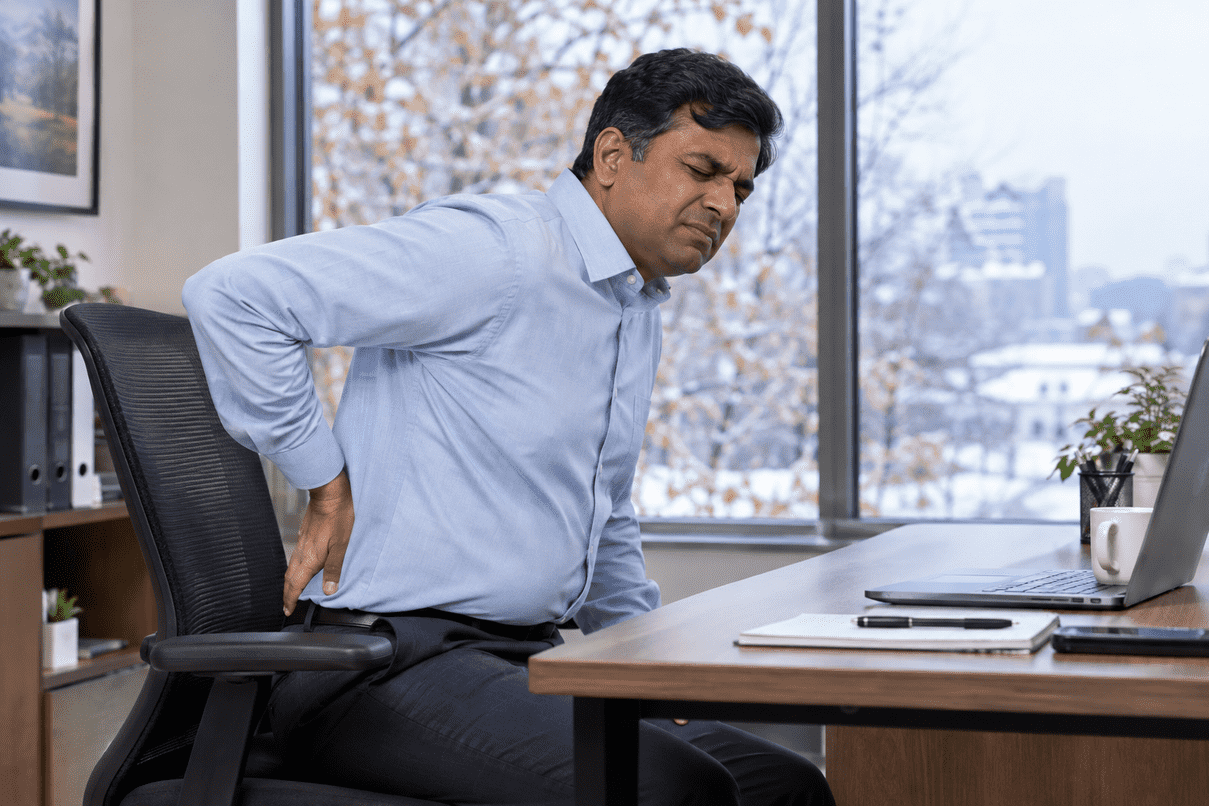
Lower back pain, leg discomfort, numbness, or difficulty walking can make everyday activities challenging. For some individuals, these symptoms may be caused by lumbar spinal stenosis, a condition involving narrowing of the spaces within the lower spine that can place pressure on nearby nerves. Although this condition is more common with aging, symptoms can often be managed with conservative treatment, including physical therapy.
Understanding lumbar spinal stenosis and how physical therapy can help is an important first step toward improving mobility, maintaining independence, and returning to the activities you enjoy.
What Is Lumbar Spinal Stenosis?
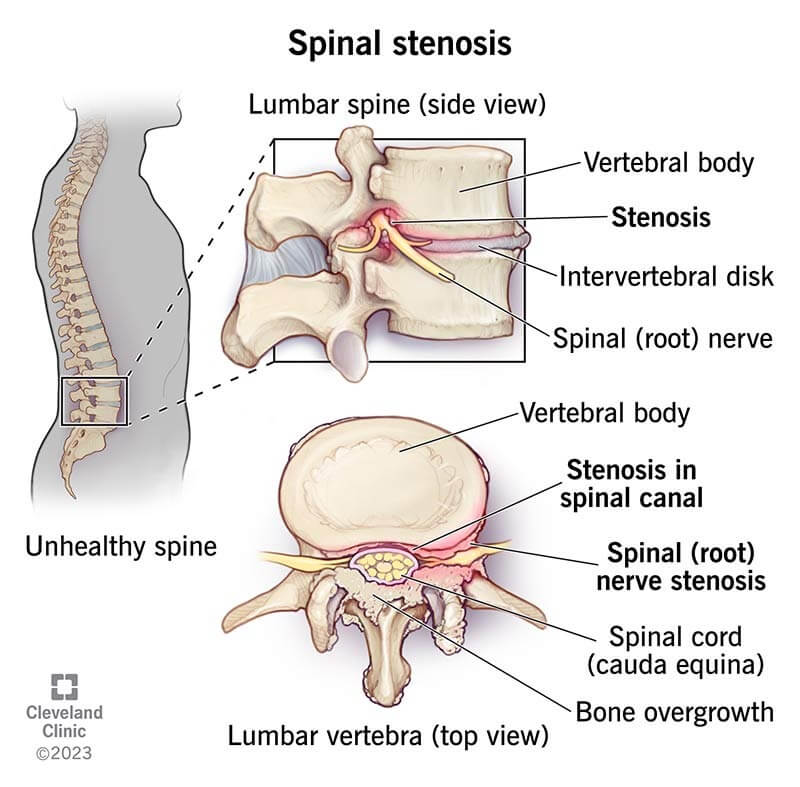
Lumbar spinal stenosis occurs when the spinal canal or the openings where nerves exit the spine become narrower, potentially compressing the nerves in the lower back.
The lumbar spine consists of five vertebrae in the lower back. Between these vertebrae are intervertebral discs that provide cushioning and help absorb forces during movement. The spinal canal protects the spinal cord and nerve roots, while smaller openings between the vertebrae allow individual nerves to exit the spine.
As we age, several changes can contribute to narrowing of these spaces, including:
- Degenerative disc changes: Intervertebral discs may lose height and flexibility over time.
- Arthritis: Enlargement of the facet joints can reduce the space available for nerves.
- Thickening of spinal ligaments: Ligaments supporting the spine may become thicker and contribute to narrowing of the spinal canal.
- Bone spurs: Bony growths associated with degenerative changes may reduce available space around the nerves.
- Spondylolisthesis: One vertebra may slip forward relative to another, potentially contributing to nerve compression.
Lumbar spinal stenosis is frequently associated with age-related degenerative changes. However, not everyone with narrowing on an MRI or X-ray experiences symptoms.
What Are the Symptoms of Lumbar Spinal Stenosis?
Common symptoms include:
- Lower back pain or stiffness
- Pain, tingling, or numbness in the buttocks or legs
- Leg heaviness or weakness, particularly with prolonged standing or walking
- Difficulty walking longer distances
- Symptoms that worsen with standing upright or extending the lower back
- Relief when sitting down, leaning forward, or bending over a shopping cart
Some people experience a condition called neurogenic claudication. This occurs when standing or walking provokes pain, heaviness, tingling, or weakness in the legs, often improving with sitting or bending forward.
How Is Lumbar Spinal Stenosis Diagnosed?
Diagnosis typically begins with a review of symptoms, medical history, and a physical examination. A healthcare provider may assess spinal mobility, lower-extremity strength, sensation, reflexes, balance, and walking tolerance.
Imaging, such as an MRI, may be recommended when symptoms warrant further investigation or when the results could influence treatment decisions. MRI can help identify areas of narrowing and potential nerve compression.
How Can Physical Therapy Help Lumbar Spinal Stenosis?
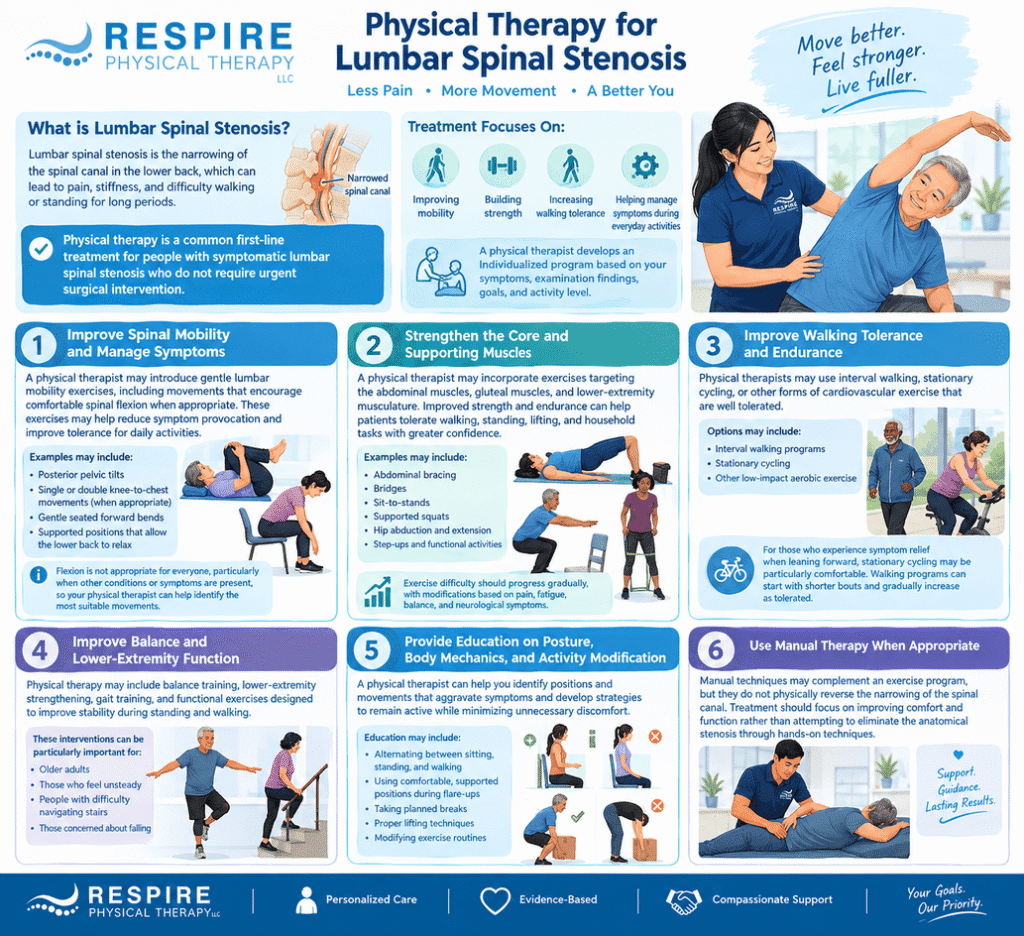
Physical therapy is a common first-line treatment for people with symptomatic lumbar spinal stenosis who do not require urgent surgical intervention. Treatment focuses on improving mobility, building strength, increasing walking tolerance, and helping individuals manage symptoms during everyday activities.
A physical therapist develops an individualized program based on the patient’s symptoms, examination findings, goals, and activity level.
1. Improve Spinal Mobility and Manage Symptoms
A physical therapist may introduce gentle lumbar mobility exercises, including movements that encourage comfortable spinal flexion when appropriate. These exercises may help reduce symptom provocation and improve tolerance for daily activities.
Examples may include:
- Posterior pelvic tilts
- Single or double knee-to-chest movements, when appropriate
- Gentle seated forward bends
- Supported positions that allow the lower back to relax
Exercises should be selected based on individual presentation. Flexion is not appropriate for everyone, particularly when other conditions or symptoms are present, so a physical therapist can help identify the most suitable movements.
2. Strengthen the Core and Supporting Muscles
A physical therapist may incorporate exercises targeting the abdominal muscles, gluteal muscles, and lower-extremity musculature. Improved strength and endurance can help patients tolerate walking, standing, lifting, and household tasks with greater confidence.
Depending on the patient’s abilities and symptoms, exercises may include:
- Abdominal bracing
- Bridges
- Sit-to-stands
- Supported squats
- Hip abduction and extension exercises
- Step-ups and other functional strengthening activities
Exercise difficulty should progress gradually, with modifications based on pain, fatigue, balance, and neurological symptoms.
3. Improve Walking Tolerance and Endurance
Physical therapists may use interval walking, stationary cycling, or other forms of cardiovascular exercise that are well tolerated.
For individuals who experience symptom relief when leaning forward, stationary cycling may be particularly comfortable because it allows a more flexed spinal position.
Walking programs can begin with shorter bouts of activity and gradually increase as tolerated. The goal is to improve overall activity tolerance without repeatedly provoking significant or prolonged symptoms.
4. Improve Balance and Lower-Extremity Function
Physical therapy may include balance training, lower-extremity strengthening, gait training, and functional exercises designed to improve stability during standing and walking.
These interventions can be particularly important for older adults or individuals who feel unsteady, have difficulty navigating stairs, or are concerned about falling.
5. Provide Education on Posture, Body Mechanics, and Activity Modification
A physical therapist can help patients identify positions and movements that aggravate symptoms and develop strategies to remain active while minimizing unnecessary discomfort.
Education may include:
- Alternating between sitting, standing, and walking rather than remaining in one position for extended periods
- Using comfortable, supported positions during symptom flare-ups
- Taking planned breaks during longer walks or household tasks
- Adjusting lifting techniques and gradually building tolerance for physical activity
- Modifying exercise routines to accommodate current symptoms
6. Use Manual Therapy When Appropriate
Manual techniques may complement an exercise program, but they do not physically reverse the narrowing of the spinal canal. Treatment should focus on improving comfort and function rather than attempting to eliminate the anatomical stenosis through hands-on techniques.
Take the Next Step Toward Better Mobility
Lumbar spinal stenosis can make walking, standing, and everyday activities more difficult, but symptoms do not automatically mean surgery is necessary. With an individualized treatment plan, physical therapy can help improve strength, mobility, balance, and walking endurance while teaching practical strategies for managing symptoms. Call Respire Physical Therapy at the Annandale Location (571-369-6728) or the Falls Church Location (703-671-1871) to schedule an appointment with one of our skilled Physical Therapists today! Click here to request an appointment online and we will contact you as soon as possible.

Tags: washingtondc, arthritic pain, health blog, choosept, pt education, arlingtonva, movement is medicine, alexandriava, evidence based practice, springfieldva, burkeva, fallschurchva, lumbar spinal stenosis, Respire Physical Therapy, ptworks, spondylolisthesis, Back pain, lower back pain, annandaleva, painfreeliving