

Hip osteoarthritis can make everyday movement feel more challenging. Activities you once enjoyed—walking, gardening, golfing, hiking, playing with your kids or grandkids, or exercising—may start to cause stiffness or discomfort. It can be tempting to stop doing the things you love altogether.
But a diagnosis of hip osteoarthritis does not automatically mean giving up an active lifestyle.
With the right approach, many people can continue participating in meaningful activities while managing symptoms and supporting healthy movement. Physical therapy can play an important role in helping you understand your hip, build strength, improve mobility, and develop strategies that allow you to stay active.
What Is Hip Osteoarthritis?
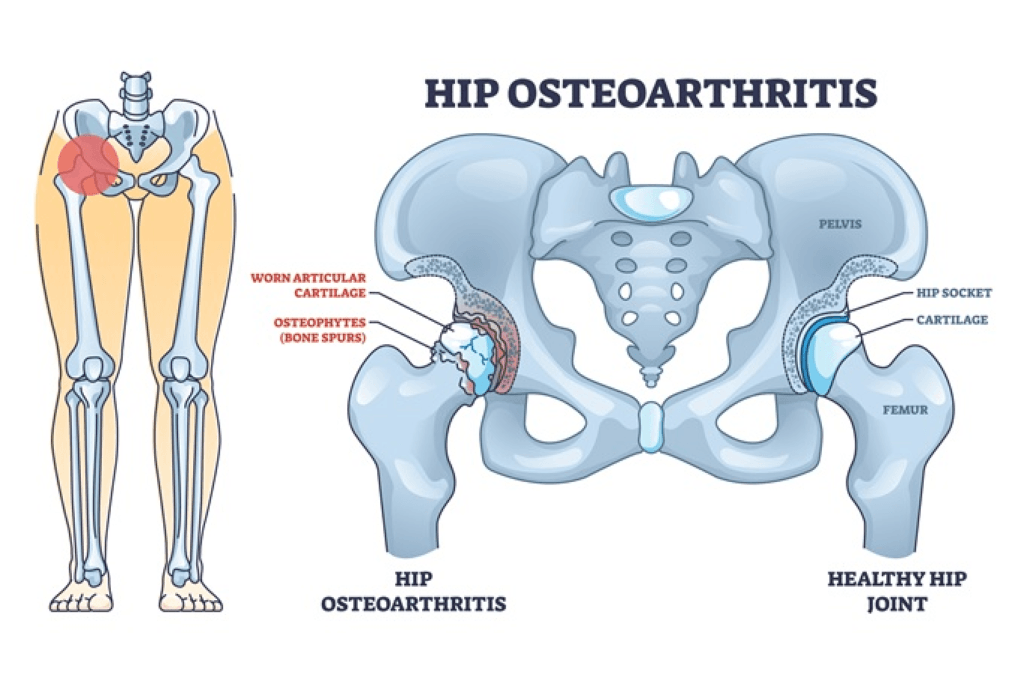
Hip osteoarthritis occurs when the cartilage and other tissues that help the hip joint move smoothly undergo changes over time. These changes can contribute to pain, stiffness, reduced mobility, and difficulty with activities such as walking, climbing stairs, putting on shoes, or getting in and out of a car.
Symptoms can vary significantly from person to person. Some people experience occasional discomfort, while others notice symptoms during specific activities or after prolonged periods of sitting or standing.
Importantly, experiencing hip osteoarthritis does not mean your hip needs to be completely rested.
Movement Is Still Important
When your hip hurts, avoiding movement may seem like the safest option. However, prolonged inactivity can contribute to muscle weakness, reduced mobility, and decreased confidence with movement.
Instead of thinking, “I can’t do this anymore,” it can be helpful to ask:
“How can I modify this activity so I can continue doing it comfortably and safely?”
Physical therapy often focuses on finding that balance.
Your physical therapist can evaluate how you move, identify factors that may be contributing to your symptoms, and help you develop an individualized exercise and activity plan.
Strength Can Help You Stay Active
Strong muscles around the hip, pelvis, and legs can help support your ability to perform everyday activities and recreational pursuits.
A physical therapist may recommend exercises designed to improve:
- Hip and leg strength
- Core and pelvic stability
- Balance
- Joint mobility
- Walking mechanics
- Overall endurance
Your exercise program should be tailored to your current abilities and goals. The goal isn’t simply to complete a list of exercises—it’s to build the capacity you need for the activities that matter to you.
For example, if your goal is to return to hiking, your program may eventually incorporate exercises that challenge strength, balance, endurance, and uneven-surface control.
You Do Not Need to Give Up Your Favorite Activities
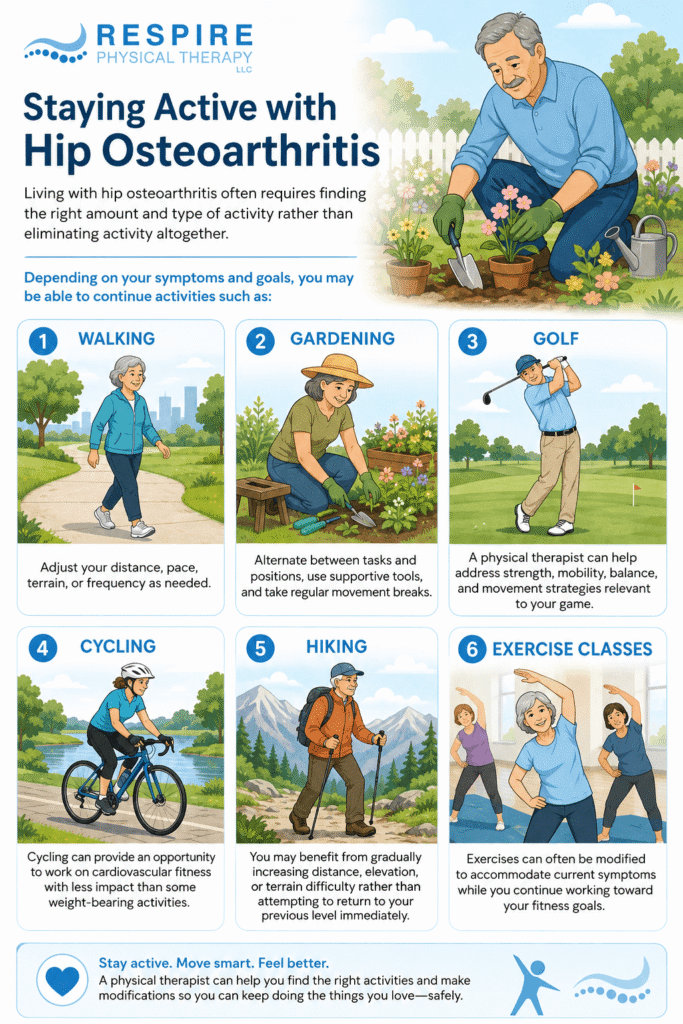
Living with hip osteoarthritis often requires finding the right amount and type of activity rather than eliminating activity altogether.
Depending on your symptoms and goals, you may be able to continue activities such as:
Walking: Adjust your distance, pace, terrain, or frequency as needed.
Gardening: Alternate between tasks and positions, use supportive tools, and take regular movement breaks.
Golf: A physical therapist can help address strength, mobility, balance, and movement strategies relevant to your game.
Cycling: Cycling can provide an opportunity to work on cardiovascular fitness with less impact than some weight-bearing activities.
Hiking: You may benefit from gradually increasing distance, elevation, or terrain difficulty rather than attempting to return to your previous level immediately.
Exercise classes: Exercises can often be modified to accommodate current symptoms while you continue working toward your fitness goals.
Learn to Manage Activity, Not Avoid It
One of the most useful strategies for managing osteoarthritis symptoms is pacing.
Instead of doing as much as possible on a “good” day and then being forced to rest for several days afterward, try gradually increasing your activity and paying attention to how your body responds.
You might:
- Break a longer activity into shorter sessions.
- Alternate more demanding tasks with easier ones.
- Schedule rest or recovery periods before you become exhausted.
- Increase activity gradually rather than making large jumps.
- Track which activities tend to aggravate your symptoms.
This approach can help you stay consistent without feeling like every activity has to be all-or-nothing.
Pain Doesn’t Always Mean “Stop”
Pain is an important signal, but it doesn’t always mean that movement is causing damage.
How you respond to discomfort can depend on the activity, the intensity of your symptoms, and how you feel afterward. A physical therapist can help you distinguish between an expected response to increasing activity and symptoms that suggest you should modify what you’re doing.
If hip pain is keeping you from your favorite activities , physical therapy can help properly evaluate and improve your symptoms to get you back to doing what you love. Call Respire Physical Therapy at the Falls Church Location (703-671-1871) or the Annandale Location (571-369-6728) to schedule an appointment with one of our skilled Physical Therapists today! Click here to request an appointment online and we will contact you as soon as possible.

Tags: painfreeliving, washingtondc, hip pain, health blog, pt education, arthritic pain, hip osteoarthritis, choosept, regain your movement freedom, arlingtonva, movement is medicine, alexandriava, evidence based practice, springfieldva, pt works, Physical Therapy, burkeva, Respire Physical Therapy, annandaleva, physical therapist