

Have you ever felt unsteady while walking, experienced dizziness when turning your head, or found yourself losing your balance for no apparent reason? If you have experienced repeated falls or feel less confident on your feet, the cause may be more than muscle weakness or poor coordination. One often-overlooked contributor to balance problems is the vestibular system, a sensory system in the inner ear that plays a critical role in maintaining balance, stabilizing vision, and helping you navigate your surroundings.
Vestibular dysfunction can make everyday activities, such as walking, turning, bending down, or getting out of bed, feel more challenging. Understanding how this system works and recognizing the signs of vestibular involvement can be an important first step toward improving balance and reducing your risk of future falls.
What Is the Vestibular System?
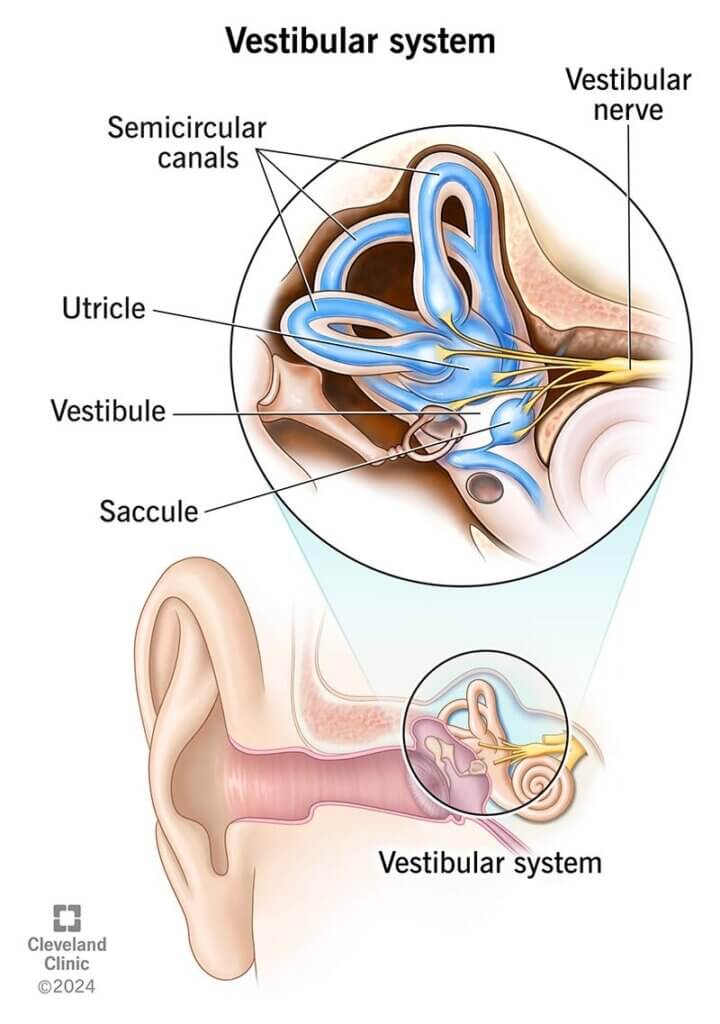
The vestibular system is located in the inner ear and works closely with your eyes, muscles, joints, and brain to help you maintain balance and understand your body’s position and movement in space.
The vestibular system continuously sends information to the brain, allowing it to coordinate your posture, balance, and eye movements. When this information is inaccurate, delayed, or inconsistent with signals from your eyes and joints, you may feel dizzy, disoriented, or unsteady.
In other words, your balance depends on several systems working together. When one of these systems is not functioning properly, your body may have difficulty responding to changes in movement or your environment.
How Can Vestibular Dysfunction Contribute to Repeated Falls?
Balance is a complex process that requires your brain to interpret sensory information and coordinate appropriate muscle responses. When the vestibular system is impaired, your ability to maintain stability may be affected in several ways.
1. Difficulty Maintaining Balance During Movement
The vestibular system helps your brain detect head movement and maintain an accurate sense of orientation. If this information is disrupted, you may feel unsteady when walking, turning, changing directions, or moving through crowded environments.
These challenges can become more noticeable when walking on uneven surfaces, stepping over obstacles, or navigating unfamiliar surroundings. You may find yourself taking shorter steps, walking more cautiously, or reaching for furniture and walls for support.
2. Dizziness or Vertigo
Vestibular disorders can cause dizziness or vertigo, a sensation that you or your surroundings are spinning or moving when they are not.
Sudden episodes of vertigo can interrupt your balance and increase your risk of losing stability. Some people experience symptoms when rolling over in bed, looking up, bending down, or turning their head quickly.
One possible cause is benign paroxysmal positional vertigo (BPPV), a common inner-ear condition in which tiny calcium carbonate crystals move into the wrong part of the vestibular system. BPPV can cause brief episodes of spinning with certain head movements and may respond well to specific repositioning maneuvers performed by an appropriately trained healthcare professional.
However, not all dizziness is caused by a vestibular disorder, so a thorough assessment is important.
3. Blurred Vision During Head Movement
Your vestibular system helps stabilize your eyes while your head moves through a process called the vestibulo-ocular reflex (VOR).
For example, when you turn your head to the right, your eyes automatically move in the opposite direction to help keep your vision focused. If this reflex is impaired, your vision may appear blurry or seem to bounce while you walk or move your head.
This can make it harder to see obstacles, judge distances, or maintain awareness of your surroundings, increasing the difficulty of walking safely.
4. Difficulty Walking in Low-Light Conditions
Your brain uses three primary sources of sensory information to maintain balance: vision, the vestibular system, and proprioception.
Proprioception is your body’s ability to sense the position and movement of your joints and limbs. It helps you recognize where your feet are positioned, even when you cannot see them.
In dimly lit environments, you receive less visual information to help compensate for balance difficulties. If your vestibular system is also impaired, maintaining stability may become significantly more challenging.
This is one reason people with balance disorders may feel particularly unsteady when walking at night, getting up to use the bathroom, or moving through poorly lit spaces.
5. Reduced Confidence and Increased Fear of Falling
Repeated falls or near-falls can affect more than your physical stability. They can also lead to fear of falling, reduced confidence, and avoidance of activities that once felt routine.
You may begin limiting walks, avoiding stairs, or relying more heavily on furniture and other people for support. Over time, reduced activity can contribute to muscle weakness, decreased endurance, and further loss of balance.
This cycle can increase fall risk, making early assessment and appropriate rehabilitation especially important.
Signs That Your Balance Problems May Involve the Vestibular System
Vestibular dysfunction does not always cause obvious spinning sensations. Some people primarily experience unsteadiness, difficulty walking, or a feeling of being off balance.
Possible signs include:
- Recurrent falls or frequent near-falls without a clear explanation.
- Dizziness or a spinning sensation when changing head position.
- Feeling unsteady while walking, especially when turning.
- Blurred or bouncing vision during head movement.
- Difficulty maintaining balance in the dark or on uneven surfaces.
- Feeling disoriented or unsteady in visually busy environments, such as grocery stores.
- Nausea associated with head movement or dizziness.
- Difficulty coordinating head and body movements during daily activities.
These symptoms can have several possible causes, including vestibular disorders, vision changes, medication effects, neurological conditions, cardiovascular problems, and musculoskeletal impairments. Having one or more of these symptoms does not automatically mean you have a vestibular disorder.
If you are experiencing repeated falls, it is important to seek a medical evaluation to identify contributing factors and determine the most appropriate treatment.
How Can Physical Therapy Help?
Physical therapy can play an important role in evaluating balance difficulties, identifying functional limitations, and helping people improve their mobility and confidence.
When vestibular dysfunction is suspected, a physical therapist with appropriate vestibular rehabilitation training can perform a targeted assessment and develop an individualized treatment plan based on your symptoms, examination findings, medical history, and goals.
1. Comprehensive Balance and Fall-Risk Assessment
Your physical therapist may assess several factors that influence balance and mobility, including:
- Walking patterns, turning ability, and gait stability.
- Static and dynamic balance.
- Lower-extremity strength and coordination.
- Sensory awareness and proprioception.
- Eye movements and the relationship between head movement and vision.
- Symptoms associated with specific head positions or movements.
- Functional mobility, including transfers and stair negotiation.
Depending on your presentation, the therapist may also use standardized balance and mobility measures to establish a baseline and monitor your progress.
This assessment helps determine whether vestibular dysfunction may be contributing to your symptoms and whether additional medical evaluation is needed.
2. Vestibular Rehabilitation Exercises
Vestibular rehabilitation is a specialized form of exercise-based therapy designed to address dizziness, gaze instability, and balance difficulties associated with certain vestibular disorders.
Treatment may include several types of exercises.
Gaze stabilization exercises: These exercises train you to maintain clear vision while moving your head. They may be useful when vestibular dysfunction affects the vestibulo-ocular reflex.
Habituation exercises: When appropriate, these exercises involve controlled, repeated exposure to movements or visual conditions that provoke symptoms. The goal is to reduce the severity of symptoms over time.
Balance training: Exercises may challenge your ability to maintain stability while standing, shifting your weight, reaching, or performing controlled movements.
Gait training: Practicing walking, changing directions, and coordinating head movements with walking can help improve functional mobility and confidence.
Exercises should be selected and progressed according to your specific diagnosis, tolerance, and safety needs. More challenging exercises are not necessarily better, and provoking severe or prolonged symptoms is not the goal.
3. Canalith Repositioning for BPPV
If an evaluation confirms benign paroxysmal positional vertigo, a physical therapist trained in vestibular assessment may perform a canalith repositioning procedure, such as the Epley maneuver, when appropriate for the affected ear and semicircular canal.
These maneuvers guide displaced inner-ear crystals back toward their proper location. Many people with BPPV experience substantial improvement after appropriate repositioning treatment.
Because different forms of dizziness require different treatments, it is important to identify the underlying cause before attempting a maneuver.
4. Strengthening and Functional Training
Although vestibular dysfunction can affect balance, falls are often multifactorial. Muscle weakness, reduced endurance, limited joint mobility, impaired sensation, and difficulty with transfers can also contribute.
Your physical therapist may incorporate strengthening exercises for the hips, legs, and core, along with functional activities such as sit-to-stand practice, stepping, reaching, and stair training.
Improving strength and functional mobility can help you respond more effectively to balance challenges and perform everyday activities with greater stability.
5. Fall-Prevention Strategies and Home Safety
Physical therapy can also help you identify practical ways to reduce fall risk at home and in the community.
Recommendations may include:
- Improving lighting in hallways, bathrooms, and stairways.
- Removing loose rugs, clutter, and other tripping hazards.
- Installing appropriate grab bars and handrails.
- Using supportive footwear.
- Learning safer strategies for transfers and navigating obstacles.
- Determining whether a cane, walker, or other assistive device may be appropriate.
Your therapist can help tailor these strategies to your home environment, mobility needs, and level of independence.
What Can You Do to Reduce Your Risk of Falling?
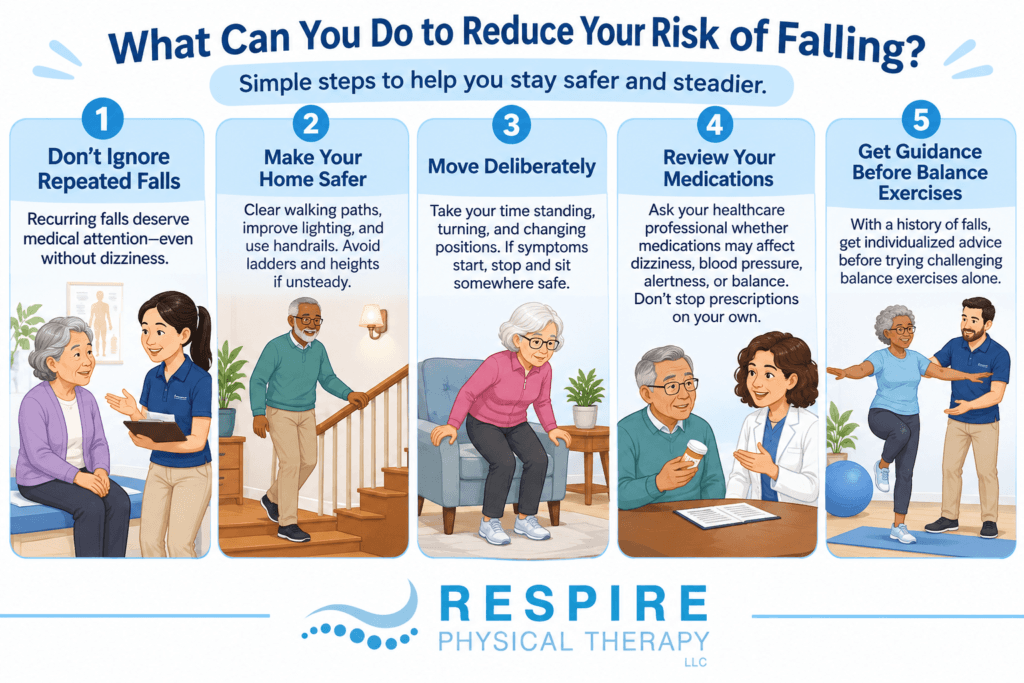
If you have experienced repeated falls or feel unsteady, there are several steps you can take while arranging an appropriate evaluation.
1. Do not ignore repeated falls. Even if you do not feel dizzy, recurring falls deserve medical attention. A healthcare professional can help investigate vestibular, neurological, cardiovascular, medication-related, and other potential contributors.
2. Make your environment safer. Keep walking paths clear, improve lighting, and use handrails where available. Avoid climbing ladders or performing activities at heights when your balance is unreliable.
3. Move deliberately. If you feel unsteady, take your time when standing up, turning, or changing positions. If symptoms begin, stop and sit somewhere safe rather than trying to push through them.
4. Discuss your medications with your healthcare professional. Some medications can contribute to dizziness, low blood pressure, drowsiness, or impaired balance. Do not stop prescribed medications without guidance.
5. Seek individualized guidance before starting balance exercises. Exercises that are helpful for one condition may be inappropriate for another. If you have a history of falls, avoid challenging balance exercises on your own in situations where losing your balance could cause injury.
When Should You Seek Medical Attention?
Repeated falls should not be dismissed as a normal part of aging. They may indicate a treatable condition or a combination of factors that need attention.
Arrange an evaluation with a healthcare professional if you experience recurrent falls, persistent dizziness, new difficulty walking, or worsening balance.
Seek emergency medical care for sudden dizziness or loss of balance accompanied by symptoms such as facial drooping, weakness or numbness on one side, difficulty speaking, double vision, a severe sudden headache, or difficulty coordinating movements. These may be signs of a stroke or another serious medical condition. Sudden severe dizziness or inability to walk safely can also require urgent evaluation, even without other symptoms.
If you fall and sustain a significant injury, hit your head, lose consciousness, or develop concerning symptoms afterward, seek prompt medical assessment.
Take the First Step Toward Better Balance
Repeated falls can be frustrating, frightening, and disruptive to your independence. However, falls are not always an inevitable consequence of aging, and many contributing factors can be identified and addressed.
The vestibular system plays an essential role in helping you maintain balance, stabilize your vision, and move safely through your environment. When this system is not functioning properly, everyday movements can become more difficult, potentially increasing your risk of falls.
A comprehensive evaluation can help determine whether vestibular dysfunction is contributing to your balance problems and whether vestibular rehabilitation, strengthening, gait training, or other interventions may help.
If you are falling or feeling unsteady on your feet, Respire PT’s physical therapists can help you get back to the life you love with the use of balance/vestibular rehab. Call Respire Physical Therapy at the Annandale Location (571-369-6728) or the Falls Church Location (703-671-1871) to schedule an appointment with one of our skilled Physical Therapists today! Click here to request an appointment online and we will contact you as soon as possible.

Tags: Vertigo Physical Therapy, Fall Prevention, prevent falls, choosept, pt education, arlingtonva, evidence based practice, alexandriava, vestibular rehabilitation therapy, springfieldva, burkeva, fallschurchva, vestibular dysfunction, annandaleva, vestivulo-ocular reflex, Physical Therapy, washingtondc, Respire Physical Therapy, health blog, physical therapist, balance training