

As we age, staying active and independent becomes more important than ever. One often-overlooked factor in healthy aging is balance. Balance isn’t just about avoiding falls—it affects how confidently you walk, climb stairs, get out of a chair, and move through daily life.
The good news? Balance can be trained at any age, and physical therapy plays a key role in helping older adults stay steady, strong, and independent.
Why Balance Declines With Age
Balance is a complex system that relies on the brain, muscles, joints, vision, and inner ear working together. As we get older, natural changes can affect all of these systems, including:
- Decreased muscle strength, especially in the legs and core
- Slower reaction times
- Reduced joint mobility and sensation in the feet
- Vision changes
- Inner ear (vestibular) changes
These changes don’t mean balance loss is inevitable—but they do mean balance needs intentional training to stay sharp.
The Link Between Balance and Fall Risk
Falls are one of the leading causes of injury in older adults. Even a single fall can lead to:
- Fractures or head injuries
- Loss of confidence and fear of movement
- Reduced independence
- Avoidance of physical activity
Balance training doesn’t just reduce fall risk—it helps people move with confidence, which is just as important.
What Balance Training Really Means
Balance training is more than standing on one leg or using a balance board. A well-designed program challenges the body in safe, progressive ways by improving:
- Strength, especially in the hips and legs
- Coordination and reaction time
- Postural control
- Sensory awareness (vision, foot sensation, inner ear input)
Physical therapists tailor balance training to each person’s needs, health history, and goals.
How Physical Therapy Supports Healthy Aging
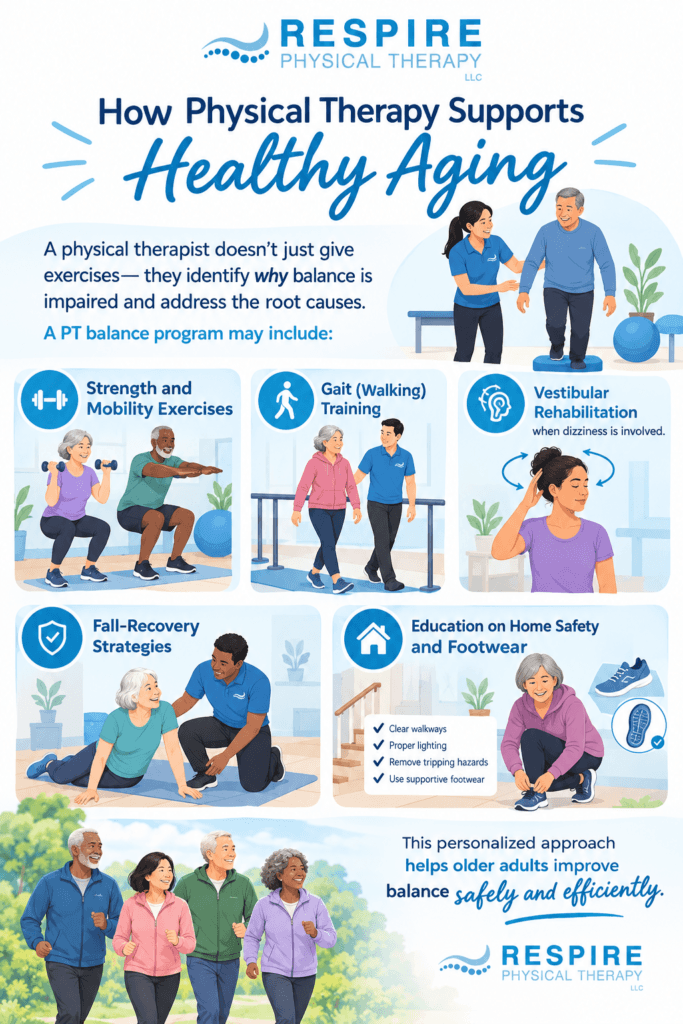
A physical therapist doesn’t just give exercises—they identify why balance is impaired and address the root causes. A PT balance program may include:
- Strength and mobility exercises
- Gait (walking) training
- Vestibular rehabilitation when dizziness is involved
- Fall-recovery strategies
- Education on home safety and footwear
This personalized approach helps older adults improve balance safely and efficiently.
Balance Training Improves More Than Stability
Consistent balance training can lead to:
- Improved walking speed and endurance
- Easier stair climbing
- Better posture
- Increased confidence in daily activities
- Greater participation in hobbies and social activities
In short, balance training supports quality of life, not just safety.
When Should You Start Balance Training?
The best time to work on balance is before a fall happens. You may benefit from physical therapy if you:
- Feel unsteady while walking
- Have had a fall or near-fall
- Avoid activities due to fear of falling
- Have conditions like arthritis, neuropathy, or dizziness
- Use furniture or walls for support
Early intervention leads to better outcomes.
Take Control of Your Balance—and Your Independence
Aging doesn’t mean giving up confidence or independence. With the right balance training, you can continue doing the things you enjoy—safely and comfortably.
If you are feeling more unsteady on your feet, physical therapy can help properly evaluate and improve your balance. Call Respire Physical Therapy at the Falls Church Location (703-671-1871) or the Annandale Location (571-369-6728) to schedule an appointment with one of our skilled Physical Therapists today! Click here to request an appointment online and we will contact you as soon as possible.

Tags: annandaleva, painfreeliving, Fall Risk, washingtondc, mobility, balance training, arthritic pain, prevent falls, choosept, pt education, arlingtonva, regain your movement freedom, alexandriava, movement is medicine, springfieldva, burkeva, Physical Therapy, fallschurchva, Respire Physical Therapy, ptworks, physical therapist