

If you’ve ever rolled over in bed or looked up quickly and suddenly felt like the room was spinning, you know how unsettling vertigo can be. One of the most common causes of these brief but intense dizzy spells is Benign Paroxysmal Positional Vertigo (BPPV). While the name may sound complex, the condition is well understood—and highly treatable, especially with the help of physical therapy.
What Is BPPV?
BPPV is a mechanical problem within the inner ear that disrupts your sense of balance. It causes short episodes of vertigo triggered by specific head movements, such as:
- Lying down or getting out of bed
- Rolling from side to side
- Tilting your head back (like when reaching for something overhead)
- Bending forward
Each episode usually lasts less than a minute, but the sensation can feel intense and disorienting.
What Causes That Spinning Sensation?
Inside your inner ear are tiny crystals made of calcium carbonate called otoconia. These crystals normally sit in a specific part of the ear and help detect gravity and motion.
With BPPV, some of these crystals become dislodged and drift into one of the semicircular canals—fluid-filled structures that sense rotational movement. When you move your head, the misplaced crystals shift, sending incorrect signals to your brain. The result? A sudden sensation that you—or the room—are spinning.
Common Symptoms of BPPV
- Brief episodes of vertigo (typically under 60 seconds)
- Dizziness with position changes
- Nausea or occasional vomiting
- Unsteadiness or imbalance
- Sensitivity to head movements
Some people also experience abnormal eye movements (called nystagmus), which clinicians use as a key sign during diagnosis.
How Is BPPV Diagnosed?
A physical therapist or healthcare provider can usually identify BPPV through a simple clinical test called the Dix-Hallpike maneuver. This involves guiding you through specific head and body positions while monitoring your symptoms and eye movements.
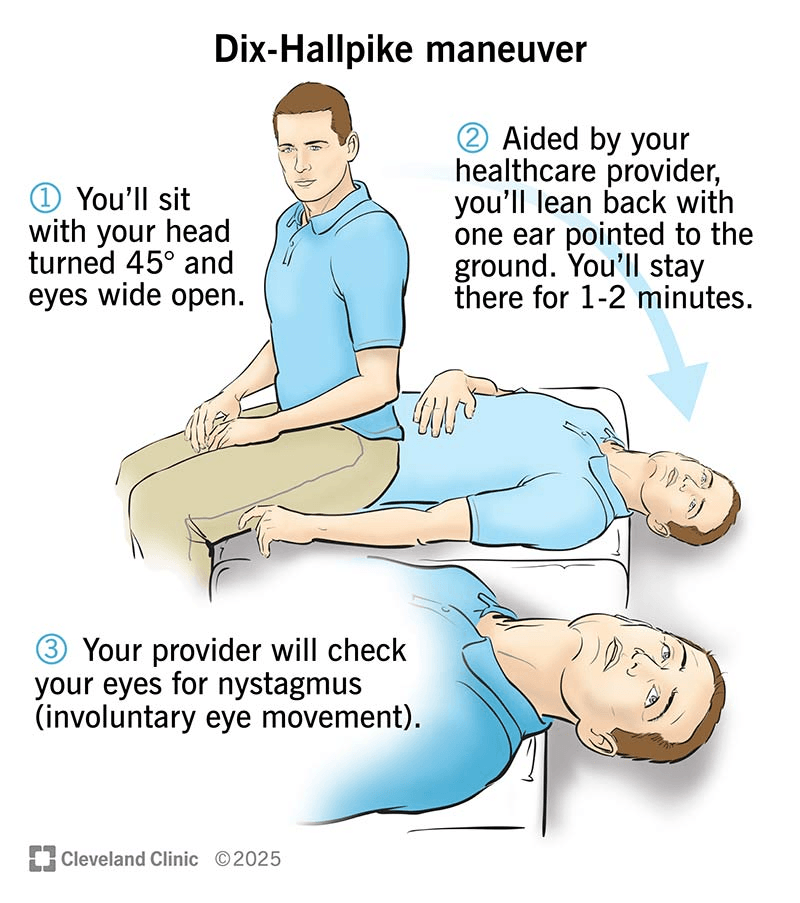
The test is quick, safe, and often provides immediate answers.
The Most Effective Treatment: Physical Therapy
The good news is that BPPV is one of the most treatable causes of vertigo. Physical therapy—specifically vestibular rehabilitation—is considered the gold standard for care.
Canalith Repositioning Maneuvers
Treatment focuses on moving the displaced crystals back to their proper location in the inner ear. This is done through a series of precise, guided movements known as canalith repositioning maneuvers.
The most commonly used is the Epley maneuver, which can often resolve symptoms in just one or two sessions.
Other techniques may include:
- The Semont (Liberatory) maneuver
- Brandt-Daroff exercises (often prescribed for home use)
Your physical therapist will determine which maneuver is appropriate based on the affected ear and canal.
What to Expect During a Physical Therapy Visit
During your visit, your therapist will:
- Review your symptoms and medical history
- Perform positional testing to confirm BPPV
- Administer the appropriate repositioning maneuver
- Provide education and guidance for symptom management
- Recommend follow-up care if needed
Many patients experience immediate or rapid improvement—sometimes even after the first treatment.
When to Seek Medical Attention
Although BPPV is benign, not all dizziness is. You should seek medical evaluation if you experience:
- Persistent or worsening vertigo
- Difficulty walking or frequent falls
- Double vision, slurred speech, or weakness
- Sudden onset of numbness or tingling
- Fainting or passing out
These symptoms may indicate a different condition that requires prompt medical care.
Take Control of Your Balance
BPPV can be disruptive, but it’s also highly manageable with the right care. Physical therapy offers a fast, safe, and effective path to relief—helping you get back to your normal activities without the fear of sudden dizziness.
If the room feels like it’s spinning, don’t ignore it. A trained physical therapist can help you find your balance again—often sooner than you think.
If you are experiencing vertigo or dizziness, Respire Physical Therapy is here to help. Our Doctors of Physical Therapy provide comprehensive physical therapy evaluations and create personalized treatment plans to reduce pain, restore mobility, and help you return to the activities you love. Call Respire Physical Therapy at the Falls Church Location (703-671-1871) or the Annandale Location (571-369-6728) to schedule an appointment with one of our skilled Physical Therapists today! Click here to request an appointment online and we will contact you as soon as possible.

Tags: evidence based practice, choosept, benign paroxysmal positional vertigo, arlingtonva, epley maneuver, alexandriava, dizziness, annandaleva, pt works, painfreeliving, washingtondc, health blog, Physical Therapy, Vertigo Physical Therapy, Respire Physical Therapy, BPPV physical therapy, physical therapist, pt education