

As we grow older, it’s normal to notice some changes in our strength and energy. However, significant muscle loss isn’t simply an unavoidable part of aging. It may be a condition called sarcopenia—a progressive loss of muscle mass, strength, and function that can affect mobility, balance, and overall quality of life.
The good news is that sarcopenia can often be slowed, managed, and even improved with the right combination of exercise, nutrition, and physical therapy. Understanding the condition is the first step toward maintaining an active, independent lifestyle.
What Is Sarcopenia?
Sarcopenia is the gradual loss of skeletal muscle mass and strength that commonly occurs with aging. While muscle loss begins as early as your 30s, it tends to accelerate after age 60 and can become more noticeable after age 70.
Although aging is the primary risk factor, sarcopenia isn’t caused by age alone. A sedentary lifestyle, chronic illness, poor nutrition, and prolonged periods of inactivity can all contribute to faster muscle decline.
What Causes Sarcopenia?
Several factors can contribute to the development of sarcopenia, including:
- Natural aging and hormonal changes
- Physical inactivity or prolonged bed rest
- Inadequate protein intake
- Chronic health conditions, such as diabetes, heart disease, or arthritis
- Inflammation associated with certain medical conditions
- Neurological disorders that affect muscle function
Often, sarcopenia develops from a combination of these factors rather than a single cause.
Signs and Symptoms of Sarcopenia
Because muscle loss occurs gradually, many people don’t recognize the symptoms until everyday activities become more difficult.
Common signs include:
- Decreased muscle strength
- Difficulty climbing stairs
- Trouble standing up from a chair
- Slower walking speed
- Poor balance
- Increased risk of falls
- Fatigue during routine activities
- Loss of muscle definition
If these symptoms begin interfering with daily life, it’s important to seek a professional evaluation.
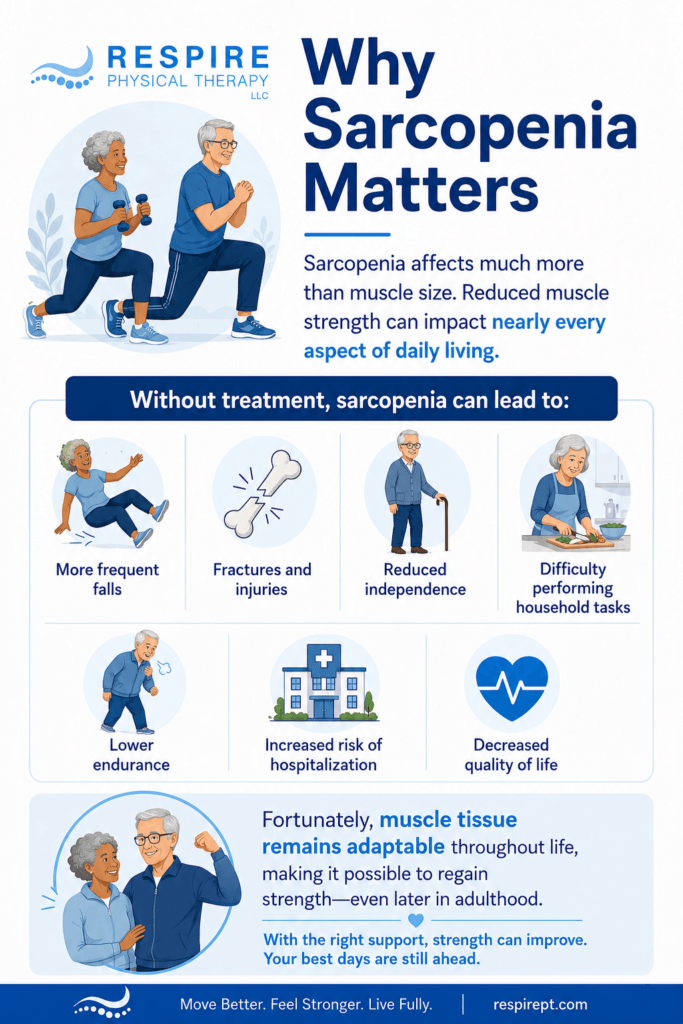
Why Sarcopenia Matters
Sarcopenia affects much more than muscle size. Reduced muscle strength can impact nearly every aspect of daily living.
Without treatment, sarcopenia can lead to:
- More frequent falls
- Fractures and injuries
- Reduced independence
- Difficulty performing household tasks
- Lower endurance
- Increased risk of hospitalization
- Decreased quality of life
Fortunately, muscle tissue remains adaptable throughout life, making it possible to regain strength—even later in adulthood.
How Is Sarcopenia Diagnosed?
Healthcare providers diagnose sarcopenia by evaluating muscle strength, physical performance, and muscle mass.
This may include:
- Grip strength testing
- Walking speed assessments
- Chair stand tests
- Balance evaluations
- Body composition measurements or imaging studies
Your healthcare provider or physical therapist may also review your medical history and lifestyle habits to determine contributing factors.
How Physical Therapy Helps Treat Sarcopenia
Physical therapy plays a central role in managing sarcopenia because it focuses on restoring strength, improving movement, and reducing fall risk.
A licensed physical therapist develops an individualized treatment plan based on your current abilities and goals.
Treatment often includes:
Progressive Strength Training
Resistance exercises are considered the most effective treatment for sarcopenia. Your therapist will guide you through safe, progressive exercises that strengthen major muscle groups without overloading your joints.
Balance and Fall Prevention
Improving balance helps reduce the risk of falls, one of the most serious complications of sarcopenia. Therapy may include single-leg exercises, stability training, and functional movement practice.
Functional Mobility Training
Physical therapy focuses on movements you use every day, such as:
- Standing from a chair
- Walking safely
- Climbing stairs
- Getting in and out of bed
- Carrying groceries
Improving these functional tasks can increase confidence and independence.
Flexibility and Joint Mobility
Maintaining flexibility allows muscles and joints to move efficiently while reducing stiffness and discomfort.
Endurance Training
Walking programs, cycling, and other low-impact aerobic exercises improve cardiovascular health while supporting overall physical function.
The Importance of Nutrition
Exercise works best when paired with proper nutrition.
Many adults with sarcopenia don’t consume enough protein to support muscle maintenance. Eating adequate protein throughout the day helps muscles recover and grow stronger after exercise.
Your healthcare provider or registered dietitian may also recommend:
- Vitamin D supplementation (if deficient)
- Calcium for bone health
- Proper hydration
- Balanced meals rich in lean proteins, fruits, vegetables, and whole grains
Can Sarcopenia Be Prevented?
While some age-related muscle loss is natural, many people can significantly reduce their risk by adopting healthy habits.
Preventive strategies include:
- Performing strength training at least two to three times per week
- Staying physically active every day
- Eating adequate protein
- Maintaining a healthy body weight
- Managing chronic health conditions
- Avoiding prolonged inactivity
- Addressing balance problems early
The earlier these habits begin, the better the long-term results.
When Should You See a Physical Therapist?
If you’ve noticed increasing weakness, difficulty getting around, or concerns about balance, don’t assume it’s “just getting older.”
A physical therapist can assess your strength, mobility, and fall risk before minor problems become major limitations.
Early intervention often leads to better outcomes, helping you stay active, independent, and confident in your daily activities.
Take Charge of Your Muscle Health
Sarcopenia doesn’t have to define the aging process. With regular exercise, proper nutrition, and guidance from a physical therapist, many people can improve strength, maintain independence, and continue enjoying the activities they love.
If you or someone you love is experiencing muscle weakness, balance issues, or mobility impairments, Respire PT’s physical therapists can help you get back to the life you love. Call Respire Physical Therapy at the Falls Church Location (703-671-1871) or the Annandale Location (571-369-6728) to schedule an appointment with one of our skilled Physical Therapists today! Click here to request an appointment online and we will contact you as soon as possible.

Tags: choosept, pt education, arlingtonva, movement is medicine, alexandriava, evidence based practice, Physical Therapy, fallschurchva, sarcopenia, Respire Physical Therapy, ptworks, physical therapist, annandaleva, Osteoarthritis, painfreeliving, washingtondc, health blog, prevent falls