

Persistent pain in the back of your thigh can be frustrating—especially when it seems to improve with rest, only to return as soon as you start running, lifting, or playing sports again. If this sounds familiar, you may be dealing with hamstring tendinopathy, a condition that affects the tendon connecting your hamstring muscles to your pelvis or lower leg.
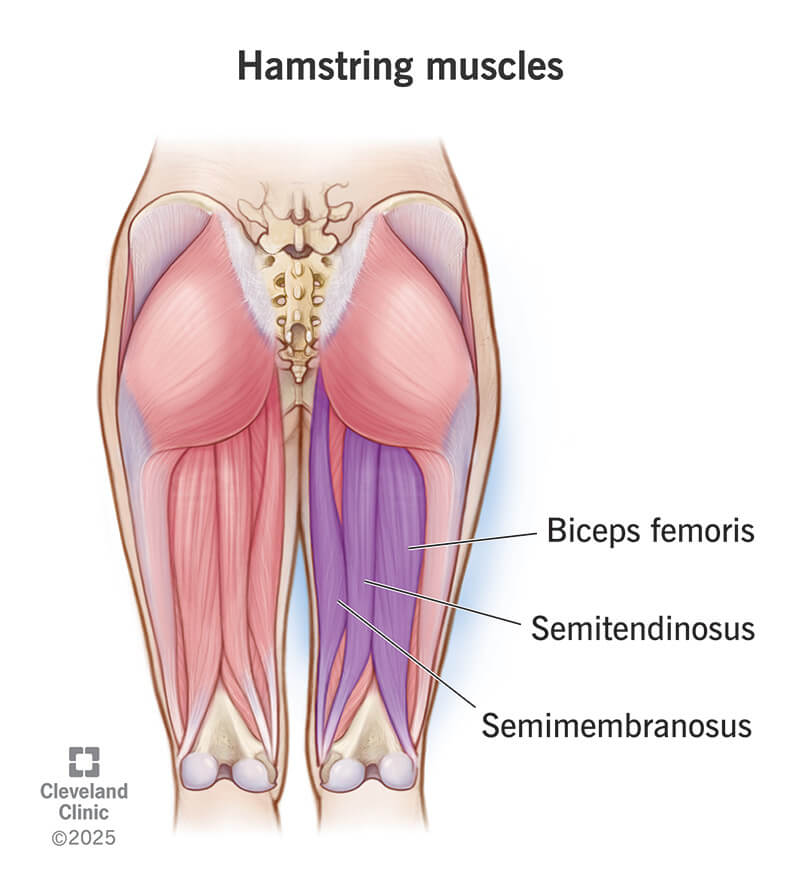
Unlike a muscle strain, hamstring tendinopathy is caused by repetitive overload of the tendon. Without the right treatment, the condition can linger for months, limiting your ability to stay active and perform at your best.
What Is Hamstring Tendinopathy?
Hamstring tendinopathy is an overuse injury that occurs when the hamstring tendon becomes irritated due to repeated stress. It most commonly affects the proximal hamstring tendon, located where the hamstring muscles attach to the sitting bone (ischial tuberosity), although it can also occur near the knee.
Unlike acute injuries, tendinopathy develops gradually over time. The tendon’s ability to repair itself cannot keep pace with repeated loading, leading to pain, stiffness, and reduced function.
Why Does Hamstring Tendinopathy Keep Coming Back?
Many people mistakenly believe that rest alone will heal a tendon injury. While reducing activity may temporarily decrease pain, the underlying tendon often remains weak and unable to tolerate normal loads.
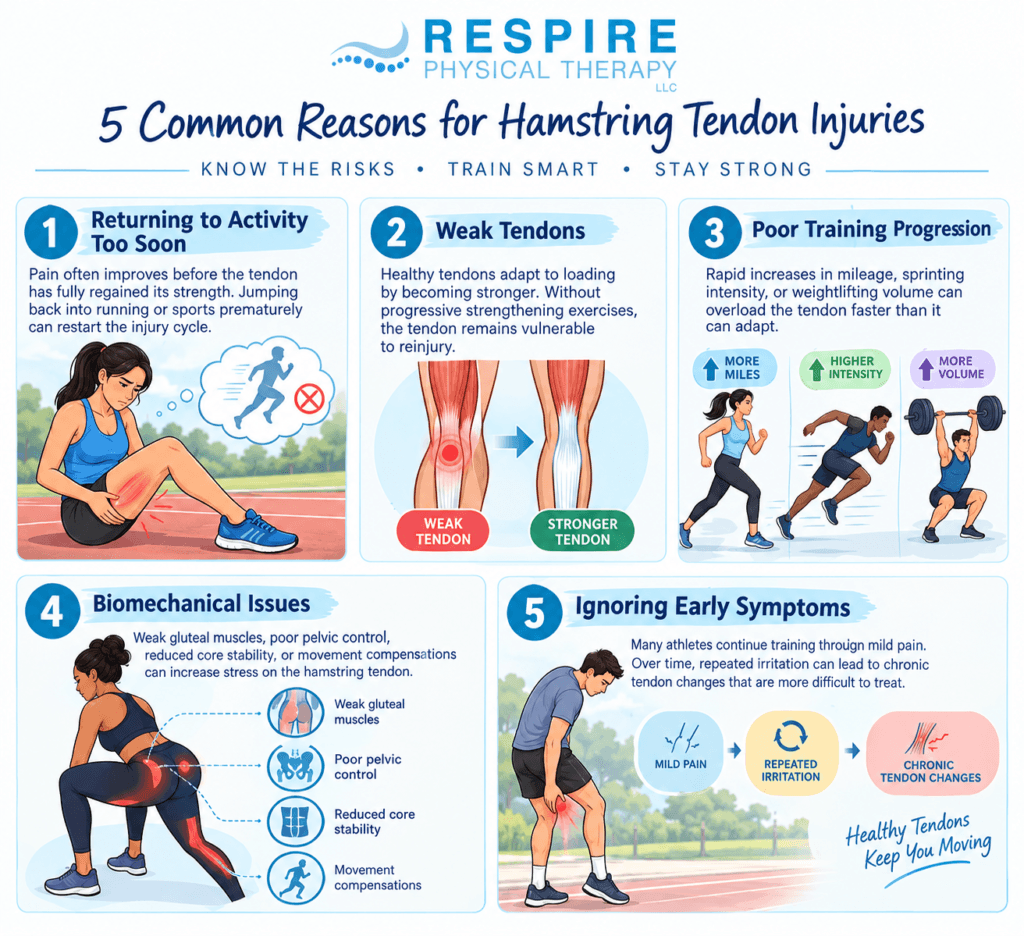
Common reasons hamstring tendinopathy becomes a recurring problem include:
1. Returning to Activity Too Soon
Pain often improves before the tendon has fully regained its strength. Jumping back into running or sports prematurely can restart the injury cycle.
2. Weak Tendons
Healthy tendons adapt to loading by becoming stronger. Without progressive strengthening exercises, the tendon remains vulnerable to reinjury.
3. Poor Training Progression
Rapid increases in mileage, sprinting intensity, or weightlifting volume can overload the tendon faster than it can adapt.
4. Biomechanical Issues
Weak gluteal muscles, poor pelvic control, reduced core stability, or movement compensations can increase stress on the hamstring tendon.
5. Ignoring Early Symptoms
Many athletes continue training through mild pain. Over time, repeated irritation can lead to chronic tendon changes that are more difficult to treat.
Common Symptoms of Hamstring Tendinopathy
Symptoms usually develop gradually and may include:
- Deep pain near the buttock or upper hamstring
- Pain while running, sprinting, or climbing hills
- Discomfort during prolonged sitting
- Pain when bending forward
- Morning stiffness
- Tenderness near the tendon attachment
- Pain during lunges, squats, or deadlifts
- Symptoms that improve during activity but worsen afterward
If symptoms persist for several weeks despite rest, evaluation by a physical therapist is recommended.
How Physical Therapy Helps
Physical therapy is considered one of the most effective treatments for hamstring tendinopathy because it addresses both the symptoms and the underlying causes.
A comprehensive rehabilitation program typically includes:
Progressive Tendon Loading
Research consistently shows that appropriately loading the tendon stimulates healing and improves its ability to tolerate stress.
Exercises may include:
- Isometric hamstring holds
- Romanian deadlifts
- Single-leg deadlifts
- Bridge variations
- Nordic hamstring exercises (when appropriate)
- Hamstring curls
- Hip extension strengthening
Exercise intensity is gradually increased based on symptoms and function.
Glute and Core Strengthening
Strong hip and trunk muscles help reduce unnecessary strain on the hamstrings.
Common exercises include:
- Clamshells
- Side planks
- Hip thrusts
- Single-leg bridges
- Monster walks
- Bird dogs
- Pallof presses
Movement Retraining
Physical therapists evaluate movement patterns during activities such as:
- Running
- Jumping
- Squatting
- Lifting
- Stair climbing
Correcting inefficient movement patterns can reduce tendon stress and improve long-term outcomes.
Flexibility and Mobility
Contrary to popular belief, aggressive hamstring stretching is often not recommended during painful stages of proximal hamstring tendinopathy because it places additional compression on the injured tendon.
Instead, therapy focuses on restoring normal hip mobility while carefully progressing flexibility exercises when appropriate.
Can You Exercise with Hamstring Tendinopathy?
In most cases, yes.
Complete rest is rarely the best solution.
Instead, your physical therapist will modify activities so the tendon receives enough loading to stimulate healing without becoming excessively irritated.
Activities are usually adjusted using a pain-monitoring approach:
- Mild discomfort during exercise is often acceptable.
- Pain should not significantly worsen afterward.
- Symptoms should return to baseline within approximately 24 hours.
This allows gradual strengthening while minimizing flare-ups.
Recovery Timeline
Recovery depends on several factors, including symptom duration, tendon health, and adherence to rehabilitation.
Typical recovery expectations include:
- Mild cases: 6–8 weeks
- Moderate cases: 3–6 months
- Chronic cases: 6–12 months or longer
Although recovery may seem slow, consistent rehabilitation produces the best long-term outcomes.
Tips to Prevent Hamstring Tendinopathy from Returning
After recovery, these strategies can help reduce the risk of recurrence:
- Continue strength training at least twice weekly.
- Increase running mileage gradually.
- Avoid sudden spikes in training intensity.
- Warm up thoroughly before exercise.
- Maintain good hip and core strength.
- Address pain early rather than training through it.
- Allow adequate recovery between high-intensity workouts.
Tendon health depends on consistent loading over time, not simply stretching or resting.
When Should You See a Physical Therapist?
Seek professional evaluation if:
- Pain has lasted longer than two to three weeks.
- Sitting causes significant buttock pain.
- Running or sports repeatedly trigger symptoms.
- Home exercises have not helped.
- Pain is interfering with work, exercise, or daily activities.
- Symptoms continue to recur despite periods of rest.
Early intervention often leads to faster recovery and reduces the risk of chronic tendon problems.
The Bottom Line
Hamstring tendinopathy is more than a stubborn hamstring injury—it is a tendon condition that requires progressive rehabilitation rather than prolonged rest. If your pain keeps returning, it’s often a sign that the tendon has not yet regained the strength and capacity needed for your activities.
If you are experiencing thigh or knee pain that is limiting your daily activities, Respire PT’s physical therapists can help you get back to the life you love. Call Respire Physical Therapy at the Annandale Location (571-369-6728) or the Falls Church Location (703-671-1871) to schedule an appointment with one of our skilled Physical Therapists today! Click here to request an appointment online and we will contact you as soon as possible.

Tags: regain your movement freedom, alexandriava, movement is medicine, springfieldva, evidence based practice, fallschurchva, burkeva, ptworks, hamstring tendinopathy, annandaleva, painfreeliving, washingtondc, Respire Physical Therapy, health blog, hamstring pain, choosept, pt education, arlingtonva