

Neck pain is a common problem, but when pain, numbness, tingling, or weakness travels from the neck into the shoulder, arm, or hand, it may be a sign of cervical radiculopathy. This condition occurs when a nerve root in the neck becomes irritated or compressed, causing symptoms that can extend beyond the neck itself.
Cervical Radiculopathy: Understanding Neck Pain That Travels Into the Arm
Cervical radiculopathy occurs when one of the nerves exiting the cervical spine—the neck portion of your spine—becomes irritated or compressed.
The cervical spine contains seven vertebrae separated by discs that help absorb shock and allow the neck to move. Nerves branch off from the spinal cord between these vertebrae and travel into the shoulders, arms, and hands.
When a nerve root becomes irritated, symptoms may follow the path of that nerve. This is why cervical radiculopathy can cause discomfort in areas such as the shoulder, arm, forearm, or hand, even though the problem originates in the neck.
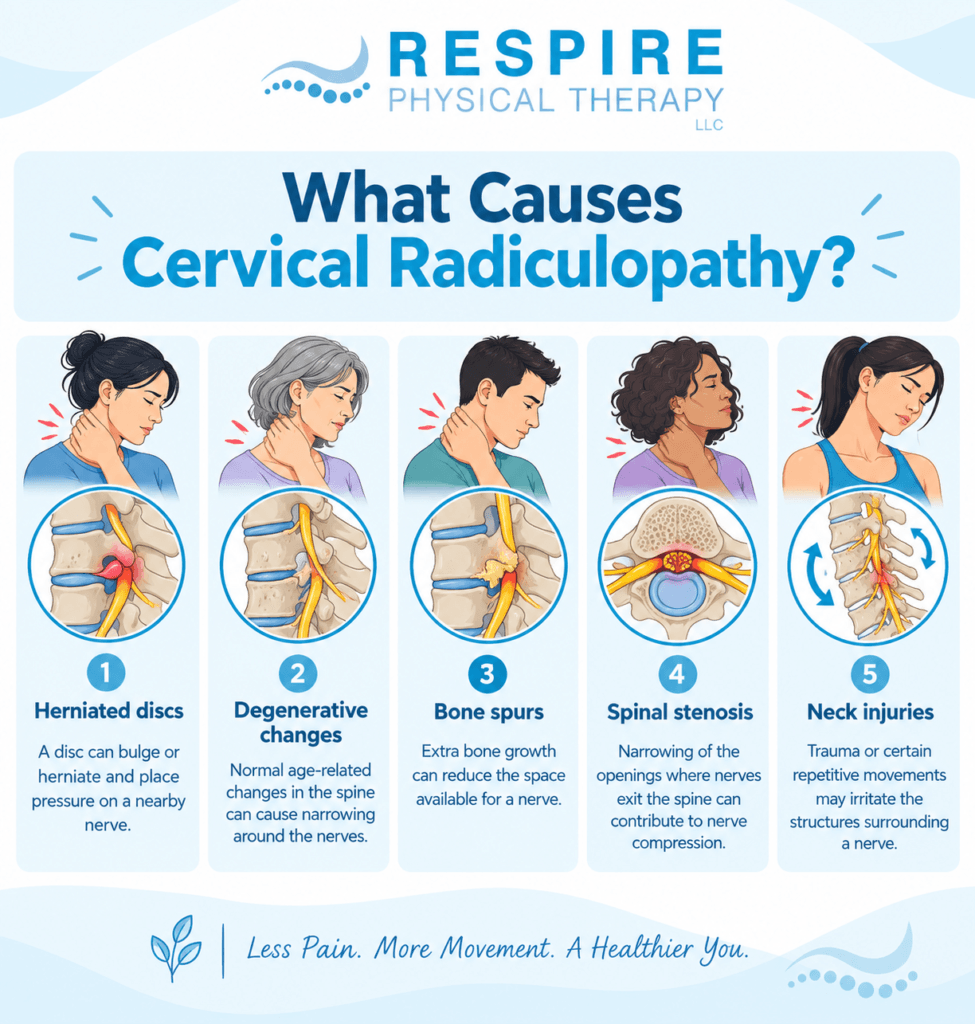
What Causes Cervical Radiculopathy?
- Herniated discs: A disc can bulge or herniate and place pressure on a nearby nerve.
- Degenerative changes: Normal age-related changes in the spine can cause narrowing around the nerves.
- Bone spurs: Extra bone growth can reduce the space available for a nerve.
- Spinal stenosis: Narrowing of the openings where nerves exit the spine can contribute to nerve compression.
- Neck injuries: Trauma or certain repetitive movements may irritate the structures surrounding a nerve.
Common Symptoms of Cervical Radiculopathy
- Neck pain
- Pain that travels into the shoulder or arm
- Tingling or “pins and needles”
- Numbness in the arm or hand
- Muscle weakness
- Difficulty with certain arm or hand movements
- Symptoms that worsen with particular neck positions
How Can Physical Therapy Help?
1. Exercises for Mobility
When neck movement is limited or certain positions aggravate symptoms, specific exercises may help improve mobility without unnecessarily irritating the nerve.
Your physical therapist can identify movements that are appropriate for your condition and gradually progress them as your symptoms improve.
2. Strengthening Exercises
Weakness can occur when a nerve is irritated for an extended period. Physical therapy can address weakness in the neck, shoulders, upper back, and arms.
Strengthening these areas can improve support and function while helping you safely return to normal activities.
3. Manual Therapy
Depending on your condition, your physical therapist may use hands-on techniques to address stiffness and improve movement in the neck and upper back.
Manual therapy may be combined with exercise to help improve overall mobility and function.
4. Nerve Mobility Exercises
Sometimes, specific exercises can help improve how the nerves move through the surrounding tissues. These are often referred to as nerve gliding or nerve mobility exercises.
These exercises should be performed under the guidance of a physical therapist because the appropriate technique and dosage can vary depending on your symptoms.
5. Posture and Movement Education
Certain positions and repetitive activities may contribute to irritation of the cervical spine. A physical therapist can help identify movements or postures that may be aggravating your symptoms and teach strategies to reduce unnecessary stress on the neck.
This may include recommendations for:
- Desk and computer setup
- Sleeping positions
- Lifting techniques
- Work-related activities
- Exercise modifications
- Everyday movement habits
6. A Gradual Return to Activity
Pain and nerve symptoms can make people hesitant to move or exercise. However, avoiding activity completely is not always necessary.
Your physical therapist can help you gradually increase your activity level while monitoring your symptoms and progressing exercises as your strength and mobility improve.
Takeaway
If you are experiencing neck pain that travels into your arm or hand, a physical therapy evaluation can be a helpful first step toward understanding your symptoms and developing an individualized treatment plan. Call Respire Physical Therapy at the Falls Church Location (703-671-1871) or the Annandale Location (571-369-6728) to schedule an appointment with one of our skilled Physical Therapists today! Click here to request an appointment online and we will contact you as soon as possible.

Tags: ptworks, physical therapist, annandaleva, neck pain, painfreeliving, Neck Stiffness, washingtondc, health blog, pt education, cervical radiculopathy, regain your movement freedom, choosept, movement is medicine, arlingtonva, cervical pain, Physical Therapy, alexandriava, evidence based practice, Respire Physical Therapy, fallschurchva, Numbness and Tingling