

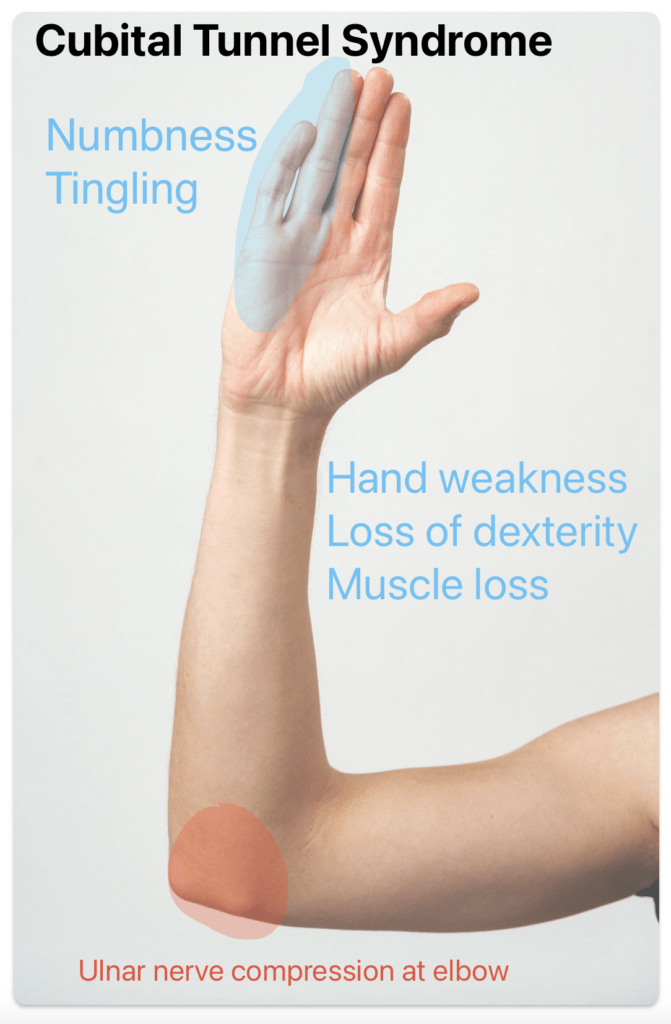
If you’ve noticed tingling, numbness, or weakness in your pinky and ring fingers, you may be experiencing ulnar nerve entrapment. This common nerve condition can affect the hand and arm, sometimes making everyday activities such as typing, gripping, driving, or sleeping uncomfortable.
The good news is that many cases can be successfully managed with conservative treatment, including physical therapy. Understanding the cause of your symptoms is an important first step toward getting the right care.
What Is the Ulnar Nerve?
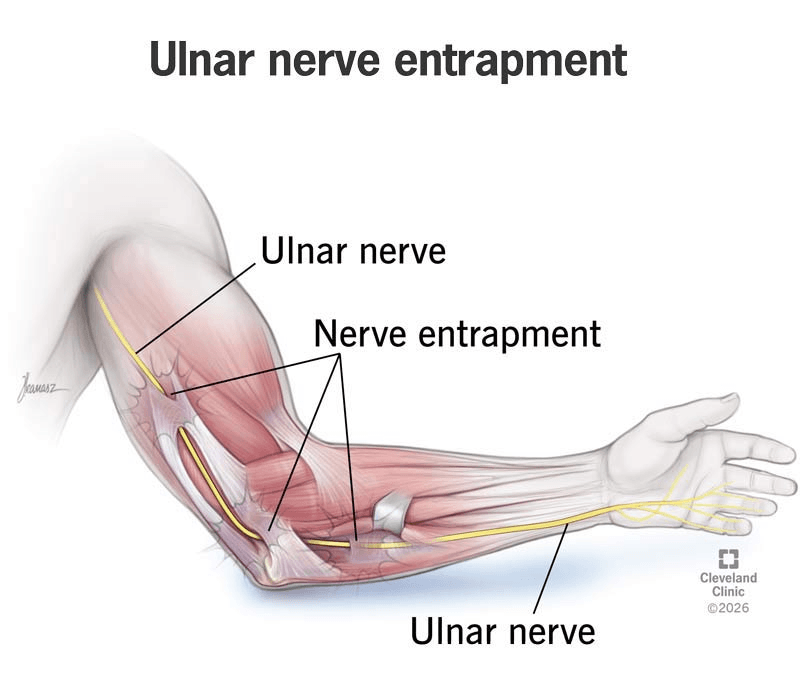
The ulnar nerve is one of the major nerves of the arm. It travels from the neck, down the inside of the arm, around the elbow, and into the hand. It provides sensation to the pinky finger and part of the ring finger and helps control several of the muscles responsible for hand and finger movement.
Because the nerve passes through relatively narrow areas, it can become compressed or irritated along its pathway. The most common location is at the elbow, where the nerve passes through a region commonly called the cubital tunnel.
Ulnar nerve compression can also occur at the wrist or, less commonly, at other points along the nerve’s path.
Common Symptoms of Ulnar Nerve Entrapment
Symptoms can vary depending on where and how severely the nerve is compressed.
Common signs include:
- Tingling or numbness in the pinky and ring fingers
- Symptoms that worsen when the elbow remains bent for prolonged periods
- Aching or discomfort along the inside of the elbow or forearm
- Weakness when gripping or pinching
- Difficulty with fine motor tasks
- A feeling of clumsiness in the hand
- In more advanced cases, muscle wasting in the hand
Some people notice symptoms primarily at night, particularly if they sleep with their elbows bent.
What Causes Ulnar Nerve Entrapment?
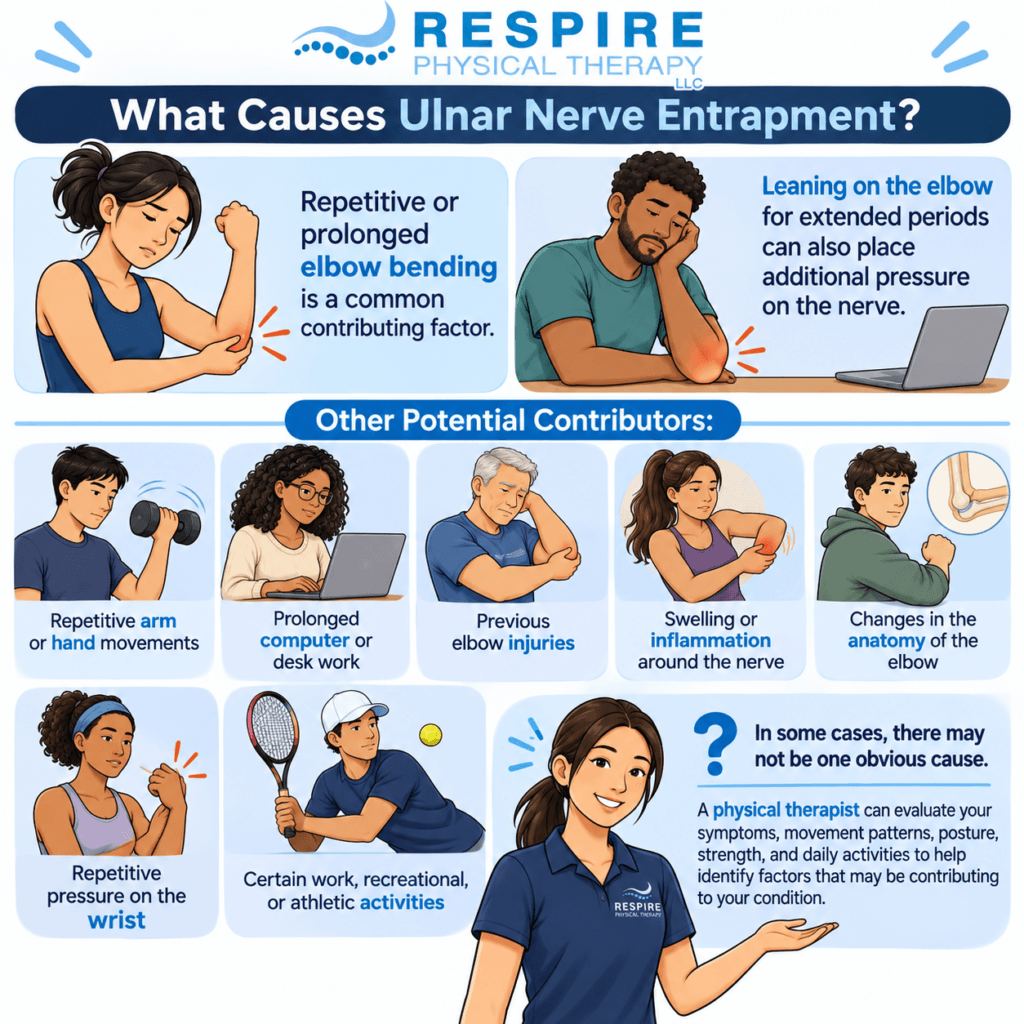
Ulnar nerve irritation can develop for several reasons. Repetitive or prolonged elbow bending is a common contributing factor. Leaning on the elbow for extended periods can also place additional pressure on the nerve.
Other potential contributors include:
- Repetitive arm or hand movements
- Prolonged computer or desk work
- Previous elbow injuries
- Swelling or inflammation around the nerve
- Changes in the anatomy of the elbow
- Repetitive pressure on the wrist
- Certain work, recreational, or athletic activities
In some cases, there may not be one obvious cause. A physical therapist can evaluate your symptoms, movement patterns, posture, strength, and daily activities to help identify factors that may be contributing to your condition.
How Is Ulnar Nerve Entrapment Diagnosed?
A healthcare professional will typically begin with a detailed history and physical examination. They may ask about when your symptoms started, what activities make them better or worse, and whether you experience weakness or changes in hand function.
The examination may include assessing:
- Sensation in the arm and hand
- Grip and pinch strength
- Elbow, wrist, shoulder, and neck movement
- Muscle strength and coordination
- Nerve mobility
- Positions or activities that reproduce your symptoms
Depending on the situation, a physician may recommend additional testing, such as nerve conduction studies or electromyography, to evaluate nerve function.
How Can Physical Therapy Help?
Physical therapy can play an important role in the conservative management of ulnar nerve entrapment. Treatment is individualized based on the location and severity of the nerve irritation and the activities that may be contributing to it.
A physical therapist may use several approaches, including:
Activity Modification
Small changes to daily habits can sometimes reduce irritation of the ulnar nerve. Your physical therapist may recommend avoiding prolonged pressure on the elbow or modifying positions that consistently reproduce your symptoms.
Nerve-Gliding Exercises
Specific exercises may help the nerve move more normally through the surrounding tissues. These exercises, sometimes called ulnar nerve glides, should be performed according to your physical therapist’s instructions. More is not necessarily better—aggressive nerve stretching can sometimes aggravate symptoms.
Strengthening Exercises
If weakness is present, a physical therapist may prescribe exercises to improve strength and control throughout the arm, wrist, and hand. Depending on your individual needs, treatment may also address the shoulder and upper back.
Posture and Ergonomic Education
Your workstation and daily posture can influence how much stress is placed on your arm and elbow. Adjustments to your desk setup, keyboard and mouse position, or sitting habits may help reduce aggravating positions.
Manual Therapy
When appropriate, hands-on techniques may be used to address mobility restrictions or soft-tissue limitations that could be contributing to symptoms. Your therapist will determine whether these techniques are appropriate for your specific condition.
When Should You See a Physical Therapist?
Occasional tingling does not necessarily mean you have a serious nerve problem. However, persistent or recurring symptoms deserve attention, particularly if they are affecting your strength or ability to use your hand.
Consider seeking an evaluation if you experience:
- Persistent numbness or tingling
- Increasing hand or arm weakness
- Difficulty gripping objects
- Increasing clumsiness or loss of hand coordination
- Symptoms that interfere with sleep or daily activities
- Symptoms that continue despite modifying aggravating activities
Early evaluation may help identify contributing factors before symptoms become more difficult to manage.
Can Ulnar Nerve Entrapment Be Prevented?
Not every case can be prevented, but certain habits may help reduce unnecessary stress on the nerve. Avoid resting your elbow on hard surfaces for long periods, take regular breaks from repetitive activities, and pay attention to positions that consistently trigger symptoms.
If you work at a computer, an ergonomic assessment may also help you identify ways to position your workstation more comfortably.
The Bottom Line
Tingling or numbness in the pinky and ring finger can be a sign of ulnar nerve entrapment, particularly when symptoms are accompanied by elbow discomfort, weakness, or symptoms that worsen with prolonged elbow bending.
Physical therapy can help address contributing movement and activity factors, improve strength and mobility, and teach strategies for managing symptoms. If you are experiencing persistent numbness, weakness, or changes in hand function, a professional evaluation can help determine the appropriate next steps.
Don’t let persistent hand tingling interfere with your daily life. A physical therapist can evaluate your symptoms and develop an individualized treatment plan to help you move more comfortably and confidently.
If you are experiencing any signs of ulnar nerve entrapment, physical therapy can help properly evaluate and improve your symptoms to get you back to doing what you love. Call Respire Physical Therapy at the Falls Church Location (703-671-1871) or the Annandale Location (571-369-6728) to schedule an appointment with one of our skilled Physical Therapists today! Click here to request an appointment online and we will contact you as soon as possible.

Tags: health blog, choosept, pt education, elbow pain, cubital tunnel syndrome, hand pain, evidence based practice, arlingtonva, burkeva, alexandriava, ulnar nerve entrapment, springfieldva, finger pain, Physical Therapy, ptworks, fallschuchva, Respire Physical Therapy, annandaleva, physical therapist, washingtondc, wrist pain