
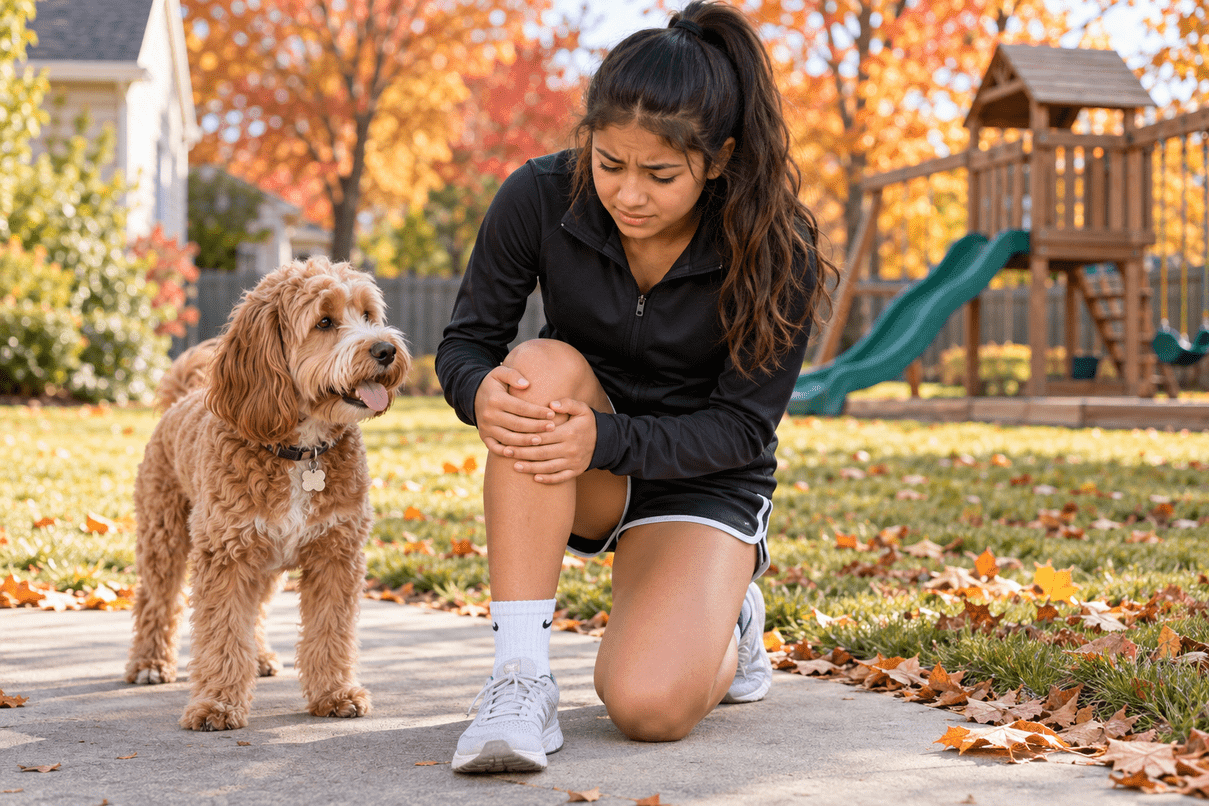
If your child is active in sports and has started complaining about pain just below the knee, you’re not alone. One of the most common causes of knee pain in growing kids and teens is Osgood-Schlatter disease—a condition that can sound alarming but is actually a manageable and temporary part of development for many young athletes.
What Is Osgood-Schlatter Disease?
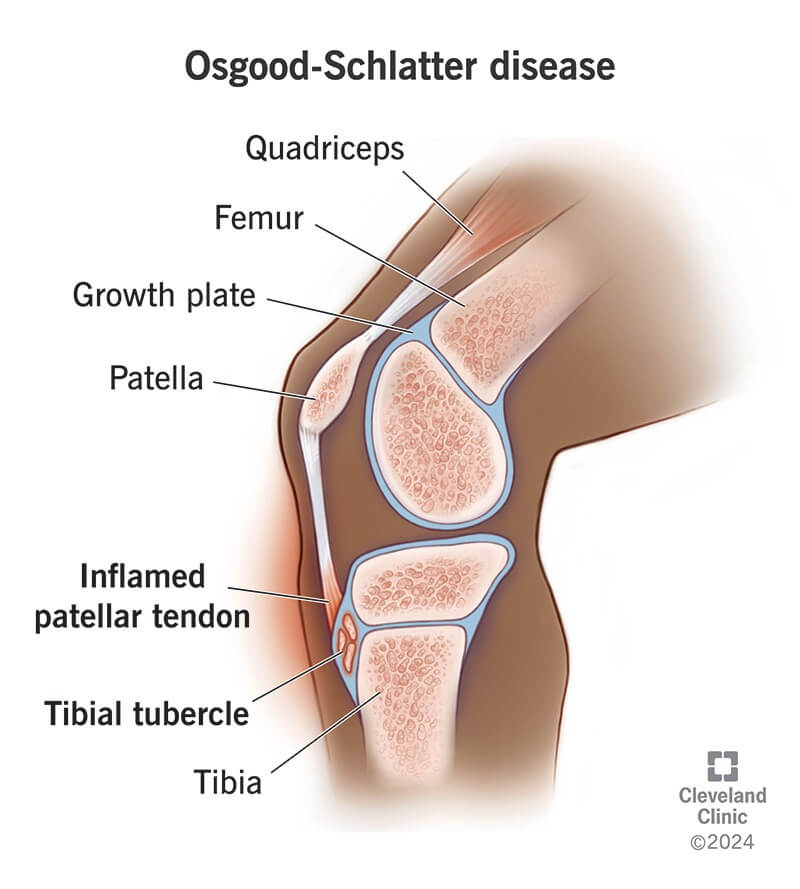
Osgood-Schlatter disease is an overuse injury that affects the growth plate at the top of the shinbone (tibia), just below the kneecap. During growth spurts, bones, muscles, and tendons are changing rapidly. The quadriceps (thigh muscles) pull on the patellar tendon, which attaches to this growth plate. Repetitive stress—especially from running, jumping, and quick direction changes—can lead to irritation and pain.
This condition is most common in children ages 9–14 who participate in sports like soccer, basketball, volleyball, and gymnastics.
Common Signs and Symptoms
Your child may be dealing with Osgood-Schlatter disease if they experience:
- Pain or tenderness just below the kneecap
- Swelling or a noticeable bump at the top of the shin
- Increased pain during activity (running, jumping, kneeling)
- Relief with rest
- Tightness in the quadriceps or hamstrings
Symptoms may occur in one or both knees and often come and go, especially during periods of rapid growth.
Is It Serious?
The good news: Osgood-Schlatter disease is not dangerous and typically resolves once your child finishes growing. However, without proper management, it can interfere with sports participation and daily activities.
Early attention and guided care can significantly reduce pain and speed up recovery.
How Physical Therapy Can Help
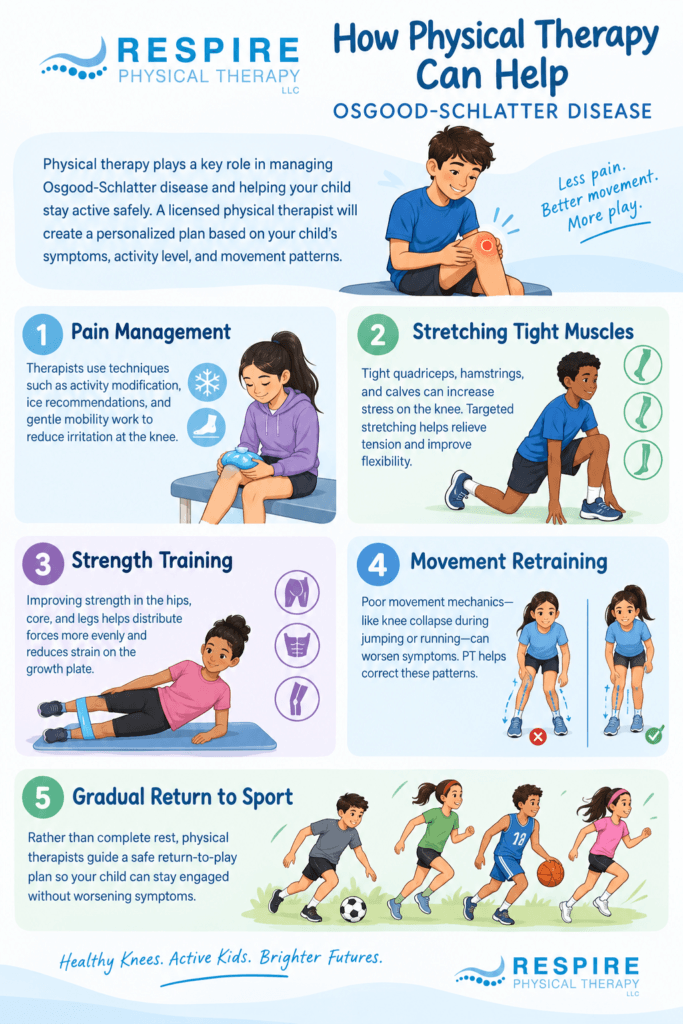
Physical therapy plays a key role in managing Osgood-Schlatter disease and helping your child stay active safely. A licensed physical therapist will create a personalized plan based on your child’s symptoms, activity level, and movement patterns.
1. Pain Management
Therapists use techniques such as activity modification, ice recommendations, and gentle mobility work to reduce irritation at the knee.
2. Stretching Tight Muscles
Tight quadriceps, hamstrings, and calves can increase stress on the knee. Targeted stretching helps relieve tension and improve flexibility.
3. Strength Training
Improving strength in the hips, core, and legs helps distribute forces more evenly and reduces strain on the growth plate.
4. Movement Retraining
Poor movement mechanics—like knee collapse during jumping or running—can worsen symptoms. PT helps correct these patterns.
5. Gradual Return to Sport
Rather than complete rest, physical therapists guide a safe return-to-play plan so your child can stay engaged without worsening symptoms.
What Can Parents Do at Home?
Supporting your child doesn’t mean they have to stop moving completely. Here are a few practical tips:
- Encourage rest during painful flare-ups
- Apply ice after activity if soreness is present
- Promote daily stretching (especially after sports)
- Avoid pushing through sharp or worsening pain
- Ensure proper footwear and training surfaces
Listening to your child’s body is key—pain is a signal, not something to ignore.
When Should You See a Physical Therapist?
Consider scheduling a physical therapy evaluation if:
- Pain lasts more than a few weeks
- Your child is limping or avoiding activity
- Symptoms are worsening despite rest
- Knee pain is affecting sports or daily life
Early treatment can prevent prolonged discomfort and help your child return to the activities they love with confidence.
Final Thoughts
Osgood-Schlatter disease can be frustrating, especially for active kids who just want to play. The good news is that with the right approach—including guidance from a physical therapist—most children recover fully and continue participating in sports without long-term issues.
If your child is experiencing knee pain, don’t wait it out—getting the right support early can make all the difference.
If your child is dealing with knee pain, Respire PT’s physical therapists can help them get back to the activities and sports they love. Call Respire Physical Therapy at the Falls Church Location (703-671-1871) or the Annandale Location (571-369-6728) to schedule an appointment with one of our skilled Physical Therapists today! Click here to request an appointment online and we will contact you as soon as possible.

Tags: regain your movement freedom, movement is medicine, choosept, evidence based practice, arlingtonva, osgood-schlatter pain, alexandriava, fallschurchva, ptworks, annandaleva, Physical Therapy, painfreeliving, physical therapist, washingtondc, knee pain, health blog